The Maasai are among Tanzania’s most recognized ethnic groups, known for their vibrant traditions, deep connection to cattle, and proud warrior heritage. Living across northern Tanzania and Kenya, the Maasai continue to preserve their identity in a rapidly modernizing world.
Identity & Origins
The Maasai are one of East Africa’s most iconic ethnic communities, known for their strong traditions, distinctive clothing, and deep connection to nature and cattle. They primarily live across northern Tanzania and southern Kenya, especially in regions surrounding the Great Rift Valley.
The Maasai speak the Maa language, while many also communicate in Kiswahili and English. Traditionally, they are semi-nomadic pastoralists, meaning their way of life has long revolved around raising cattle, which symbolize wealth, survival, and social status within the community.
For centuries, the Maasai have preserved their cultural identity through oral storytelling, ceremonies, music, and communal living. Despite modernization and changing lifestyles, many Maasai communities continue to maintain their customs, values, and spiritual connection to the land.
Their culture is deeply rooted in:
bravery and warriorhood
respect for elders
strong community bonds
harmony with wildlife and nature
Today, the Maasai represent both tradition and resilience — balancing ancient heritage with life in the modern world.
Traditional Clothing
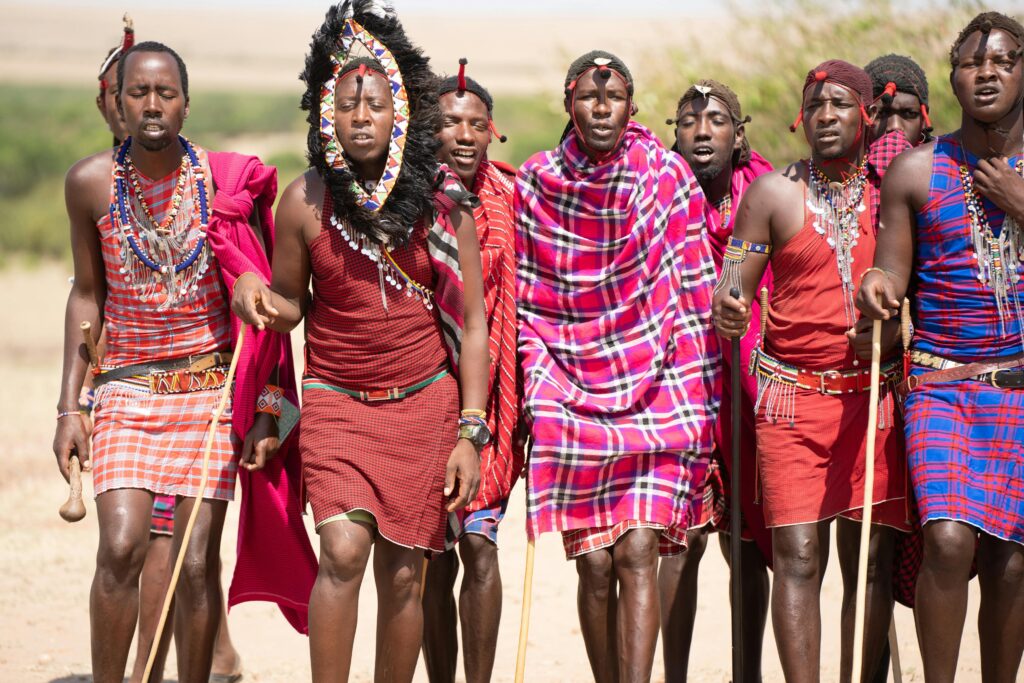
Maasai traditional clothing is among the most recognizable cultural attire in Africa, celebrated for its bold colors, intricate beadwork, and powerful symbolism. Every piece of clothing and jewelry reflects identity, age, status, and cultural pride.
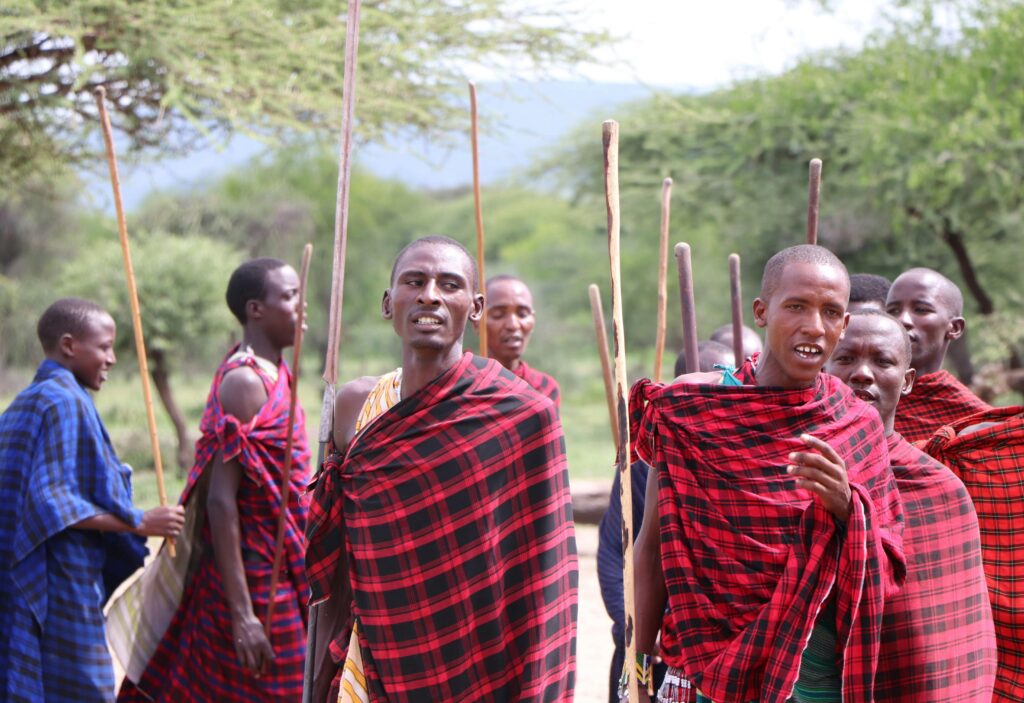
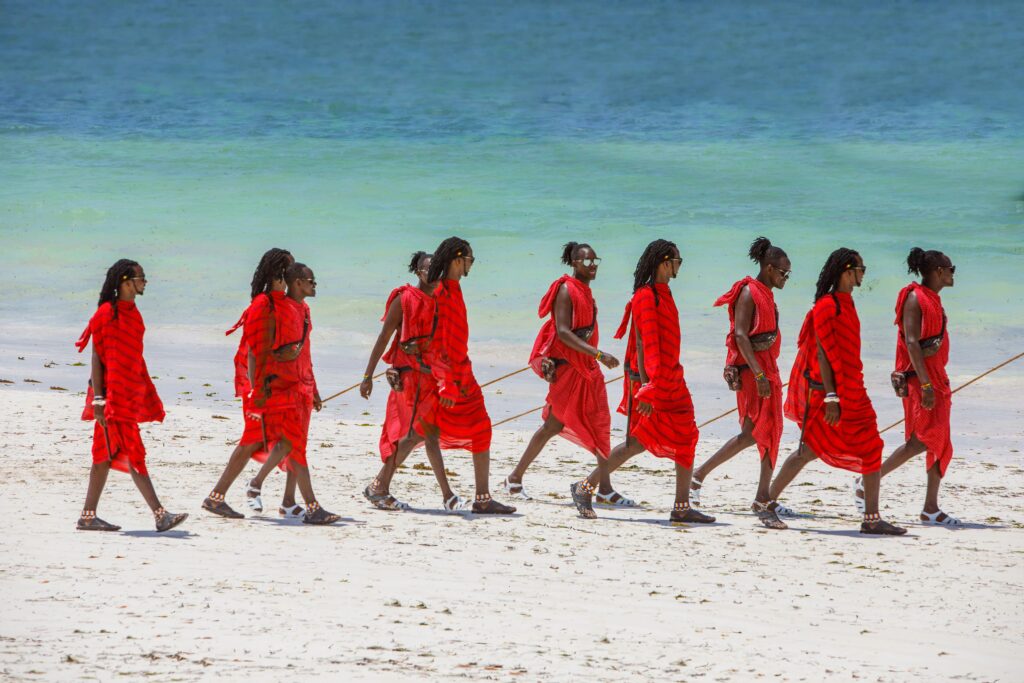
The most iconic garment is the shuka — a brightly colored fabric traditionally wrapped around the body. Red is the most common color, symbolizing bravery, strength, and protection, though blue, black, and checkered patterns are also widely worn.
Maasai men often carry wooden staffs or spears as symbols of responsibility and warriorhood, while women are especially known for their beautifully handcrafted bead jewelry. Necklaces, earrings, bracelets, and headpieces are carefully designed using vibrant colors and geometric patterns, each carrying cultural meaning.
Bead colors often symbolize different aspects of life:
Red → bravery and unity
Blue → sky and energy
White → peace and purity
Green → land and health
Yellow/Orange → hospitality and warmth
Traditionally, sandals were made from animal hide, though modern materials are commonly used today. Even as fashion evolves, traditional attire continues to play an important role during ceremonies, dances, weddings, and community celebrations.
For the Maasai, clothing is more than decoration — it is a visual expression of heritage, identity, and belonging.
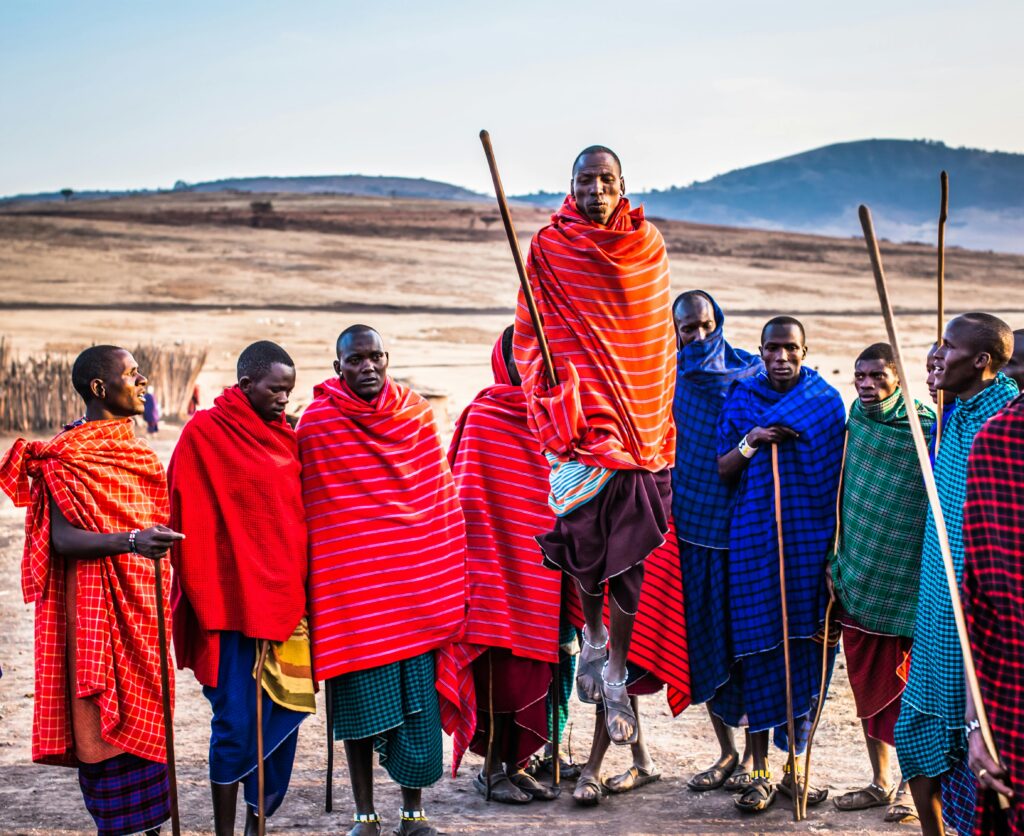
Maasai Dance.
Maasai traditional dances are vibrant cultural performances that express unity, strength, and celebration within the community. One of the most famous dances is the Adumu, also known as the jumping dance, where warriors leap high into the air in a circle while chanting rhythmically. These dances are commonly performed during ceremonies, celebrations, and important community gatherings, reflecting the spirit, pride, and energy of Maasai culture.
The Hadzabe People
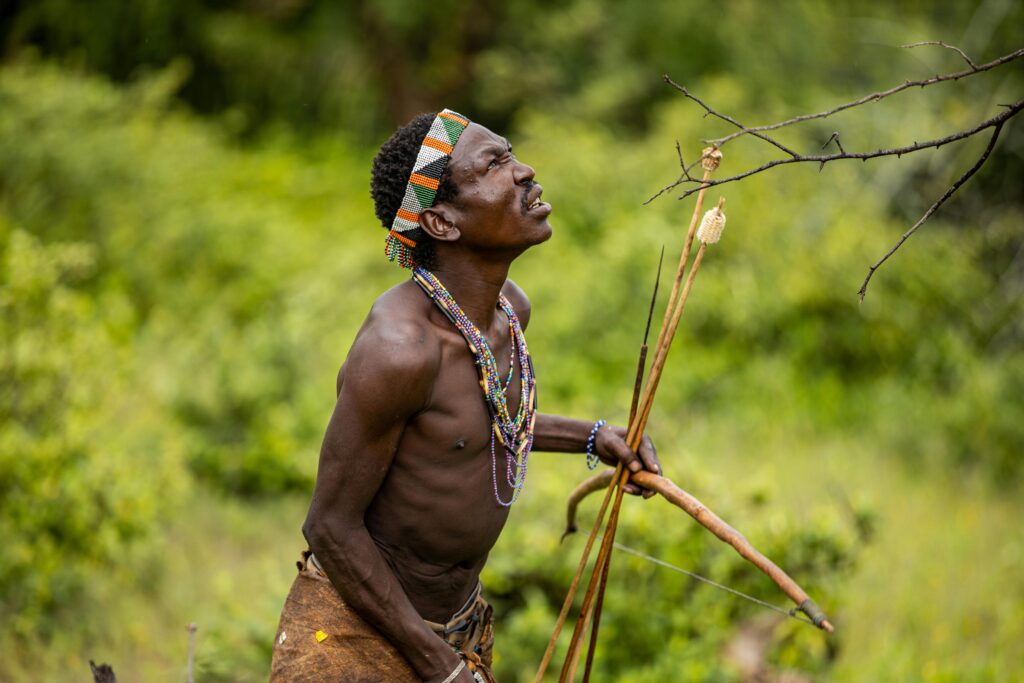
The Hadzabe are one of Tanzania’s oldest indigenous communities, living near Lake Eyasi in northern Tanzania. Known for their hunter-gatherer lifestyle, the Hadzabe have preserved ancient traditions and survival skills for thousands of years, living closely connected to nature and the surrounding wilderness.
Unlike many modern societies, the Hadzabe traditionally rely on hunting wild animals, gathering fruits, roots, and honey, and moving freely with the seasons. Their unique click-based language and simple way of life make them one of the most culturally distinctive communities in East Africa
Hunting & Survival
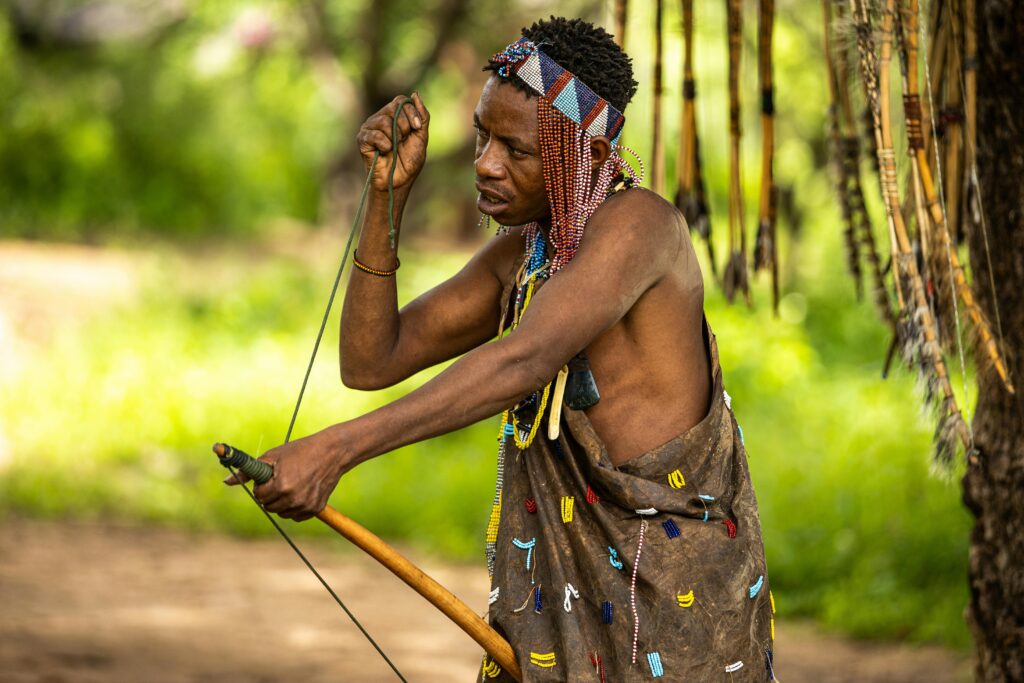
For generations, the Hadzabe people have relied on hunting and gathering as their primary way of survival, maintaining skills that have been passed down through oral tradition for thousands of years. Using handmade bows and poison-tipped arrows, Hadzabe hunters track animals with remarkable precision and deep knowledge of the natural environment.
In addition to hunting, the community gathers wild fruits, roots, tubers, and honey from the surrounding forests and grasslands. Honey is especially valued as both food and energy source. Their survival depends not only on physical skill, but also on an intimate understanding of animal behavior, weather patterns, and the rhythms of nature.
Rather than depending on modern technology, the Hadzabe continue to live closely connected to the land — preserving one of the world’s oldest hunter-gatherer traditions.
Local Markets
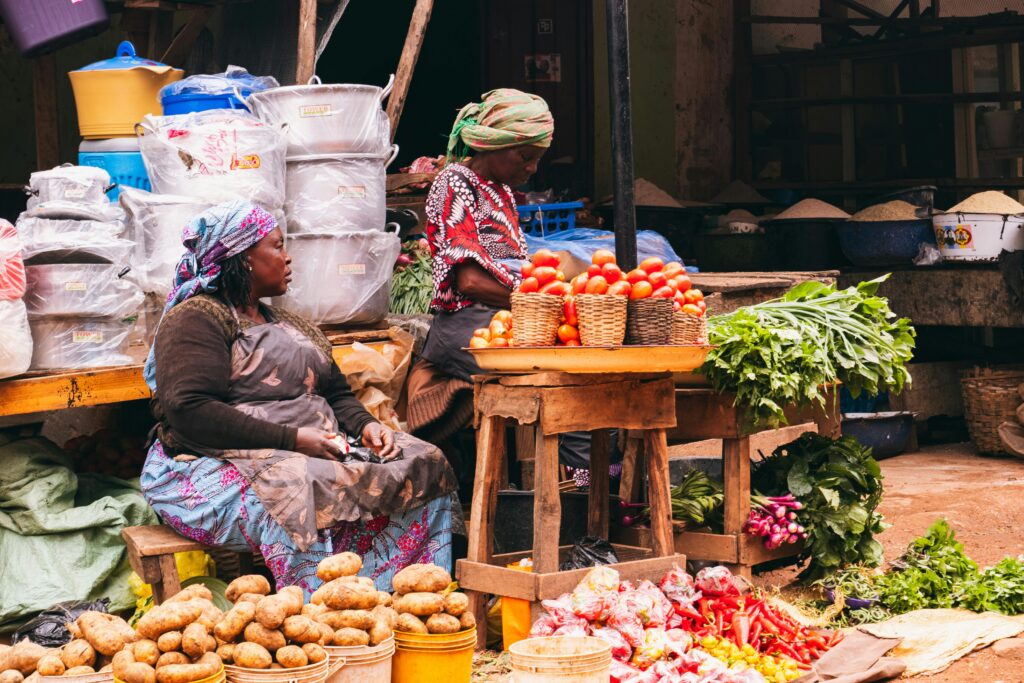
Local markets are an essential part of daily life in Tanzania, filled with energy, color, and community spirit. From busy city streets to small village centers, these markets bring people together to trade fresh produce, spices, handmade crafts, fabrics, and traditional foods.
Walking through a Tanzanian market is a vibrant cultural experience — the sound of vendors calling customers, the aroma of spices and grilled food, and the colorful displays of fruits, vegetables, and local products create a lively atmosphere unique to each region.
Markets are more than places of business; they are social spaces where stories are shared, traditions are preserved, and communities stay connected. Whether in Arusha, Zanzibar, Mwanza, or Dar es Salaam, local markets reflect the everyday heartbeat of Tanzanian life.
To understand a culture, visit its markets.
This quote reflects the idea that local markets reveal the true everyday life of a community. In Tanzanian markets, people from different backgrounds come together to trade, communicate, cook, negotiate, and share traditions that have existed for generations.
The foods being sold, the languages spoken, the clothing people wear, and the interactions between vendors and customers all tell stories about the culture, values, and lifestyle of the people. Markets are not only places for buying and selling — they are living spaces where culture is experienced in its most authentic form.
Tinga Tinga Art
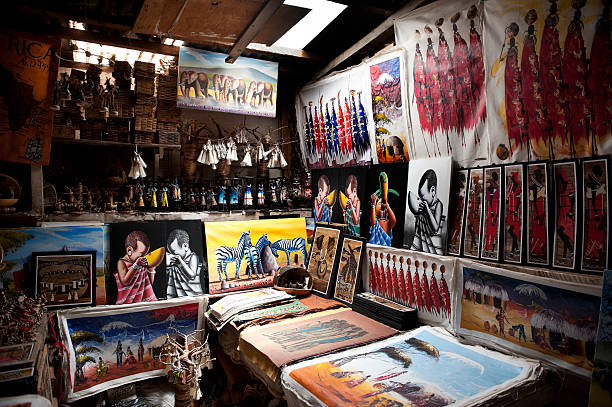
Tinga Tinga art is one of Tanzania’s most vibrant and internationally recognized art styles, known for its bold colors, playful patterns, and imaginative depictions of animals, people, and nature. Originating in Dar es Salaam in the late 1960s, it was popularized by artist Edward Saidi Tingatinga.
The style is characterized by its use of bright enamel paints on canvas or board, creating highly detailed yet simplified illustrations that often feel almost dreamlike. Animals such as elephants, giraffes, birds, and lions are commonly portrayed in exaggerated, decorative forms that reflect both creativity and cultural storytellin
Tinga Tinga art is not just decorative — it often tells stories inspired by African folklore, everyday life, and the natural world. Today, it has grown into a globally recognized art movement, representing Tanzanian creativity and cultural identity on the international stage.