
Discover the Great Wildebeest Migration in Tanzania
The Great Wildebeest Migration is one of the most extraordinary natural events on our planet and one of the main reasons why Tanzania is recognised as one of Africa's leading wildlife safari destinations. Every year, enormous herds of wildebeest, accompanied by zebras, Thomson's gazelles and other grazing animals, travel across the vast landscapes of the Serengeti ecosystem in search of fresh grass, seasonal water sources and suitable conditions for survival. This continuous movement creates a remarkable wildlife spectacle that attracts travellers, photographers, conservationists and nature enthusiasts from different parts of the world.
Unlike many wildlife events that happen during a particular season or at a specific location, the Great Migration is a continuous natural cycle that takes place throughout the year. The animals do not follow a fixed calendar or a perfectly predictable route. Instead, their movements are influenced by rainfall, vegetation growth, soil conditions and the availability of water. As the seasons change, the herds gradually move between the southern plains, central Serengeti, Western Corridor and northern Serengeti before beginning their journey south again.
The Serengeti ecosystem in northern Tanzania forms the heart of this extraordinary natural phenomenon. Its enormous grasslands, open savannahs, river systems, woodland habitats and seasonal grazing areas provide the resources required to support millions of migrating animals. The ecosystem also extends beyond Tanzania into Kenya's Maasai Mara, creating a wider wildlife landscape where animals move freely across different habitats as part of their annual journey.
The scale of the migration is difficult to understand until you experience it in person. Imagine standing on the open Serengeti plains and watching endless groups of wildebeest moving across the horizon, accompanied by zebras travelling together through the grasslands. The sound of hooves, the movement of thousands of animals and the presence of predators nearby create an unforgettable atmosphere that demonstrates the power and complexity of the African wilderness.
For many travellers, the Great Migration represents the ultimate African safari experience. Some visit Tanzania to witness the famous Mara River crossings, while others prefer the southern Serengeti during the wildebeest calving season. There are also visitors who simply want to observe the enormous migrating herds moving across the plains and experience the natural beauty of the Serengeti.
At Kili2sere Adventure, we believe that understanding the migration is an important part of planning a successful safari. Knowing where the herds are generally expected to be during your travel dates helps you choose the right region, accommodation and safari route. Every season offers something different, and the right itinerary allows you to experience the migration in a way that matches your interests.
Understanding the Great Migration: The Great Migration is not a single event that happens once a year. It is an ongoing movement of wildlife across the Serengeti-Mara ecosystem, with different regions offering different experiences throughout the seasons.
Understanding the Great Migration and Why It Happens
The main reason behind the Great Migration is the search for food and water. Wildebeest and other grazing animals depend on grasslands for survival, and the quality of these grasslands changes throughout the year as rainfall patterns change. Some regions receive seasonal rains earlier than others, encouraging fresh grass to grow in particular areas. As vegetation becomes less suitable in one location, the animals gradually move towards regions where better grazing opportunities are available.
The southern Serengeti is especially important because its short-grass plains contain nutrient-rich vegetation that supports large numbers of grazing animals. These grasslands are particularly valuable during the calving season, when female wildebeest require sufficient nutrition to support pregnancy, give birth and feed their young calves. The seasonal rains help regenerate the vegetation, creating favourable conditions for large herds to gather.
As the dry season approaches, the availability of fresh grass and water changes across the ecosystem. The migrating animals begin moving towards central and western parts of the Serengeti, eventually reaching northern regions where seasonal grazing opportunities may be more favourable. Their movements are closely connected to the natural distribution of rainfall and vegetation.
Another important factor is the relationship between different animal species. Wildebeest are the dominant participants in the migration, but they do not travel alone. Zebras and gazelles also move across the ecosystem, often sharing grazing areas and responding to similar seasonal changes. Their feeding habits differ in certain ways, allowing different species to use grassland resources at different stages of vegetation growth.
Predators are also an important part of this natural system. Lions, cheetahs, leopards, spotted hyenas and other carnivores follow the movement of prey animals, taking advantage of the seasonal abundance of wildlife. This creates opportunities to observe predator behaviour and the natural relationships that maintain the balance of the Serengeti ecosystem.
The migration is therefore not simply a journey undertaken by wildebeest. It is a complex ecological process involving rainfall, grassland regeneration, animal behaviour, reproduction, predation and the continuous relationship between wildlife and the environment. Every stage contributes to the survival of different species and demonstrates why the Serengeti is considered one of the world's most important wildlife ecosystems.
The Main Animals Involved in the Great Migration
Wildebeest are the principal animals involved in the migration. Their large numbers and continuous movement are responsible for creating the spectacular herds that visitors see across the Serengeti. These antelopes are adapted to travelling long distances across open grasslands and can cover considerable areas as they search for fresh grazing and water. Their seasonal movement also determines where many predators concentrate their activities.
Plains zebras are another important species associated with the migration. They are easily recognised by their distinctive black and white stripes and are frequently seen moving alongside wildebeest. Zebras can feed on taller grasses and help open up vegetation, which may make shorter grass available to other grazing species. Their ability to detect potential danger also contributes to the behaviour of mixed herds.
Thomson's gazelles and other gazelle species are also part of the wider migration ecosystem. These smaller antelopes feed on grasses and other vegetation and can be observed in different Serengeti habitats throughout the year. Although they do not always travel in the same enormous concentrations as wildebeest, their presence adds to the diversity of wildlife associated with the migration.
The presence of predators makes the migration even more fascinating. Lions frequently follow large herds and may be seen resting in the grasslands or moving through areas where prey animals gather. Cheetahs are particularly associated with open plains where they can use their speed to hunt. Leopards generally prefer more concealed habitats, while hyenas are adaptable predators and scavengers that benefit from the seasonal availability of food.
Nile crocodiles are particularly associated with the major river systems, including the Grumeti and Mara rivers. These large reptiles form part of the natural aquatic ecosystem and may be encountered when migrating animals approach river crossings. Their presence is one of the reasons why river crossings are such important and challenging stages of the migration.
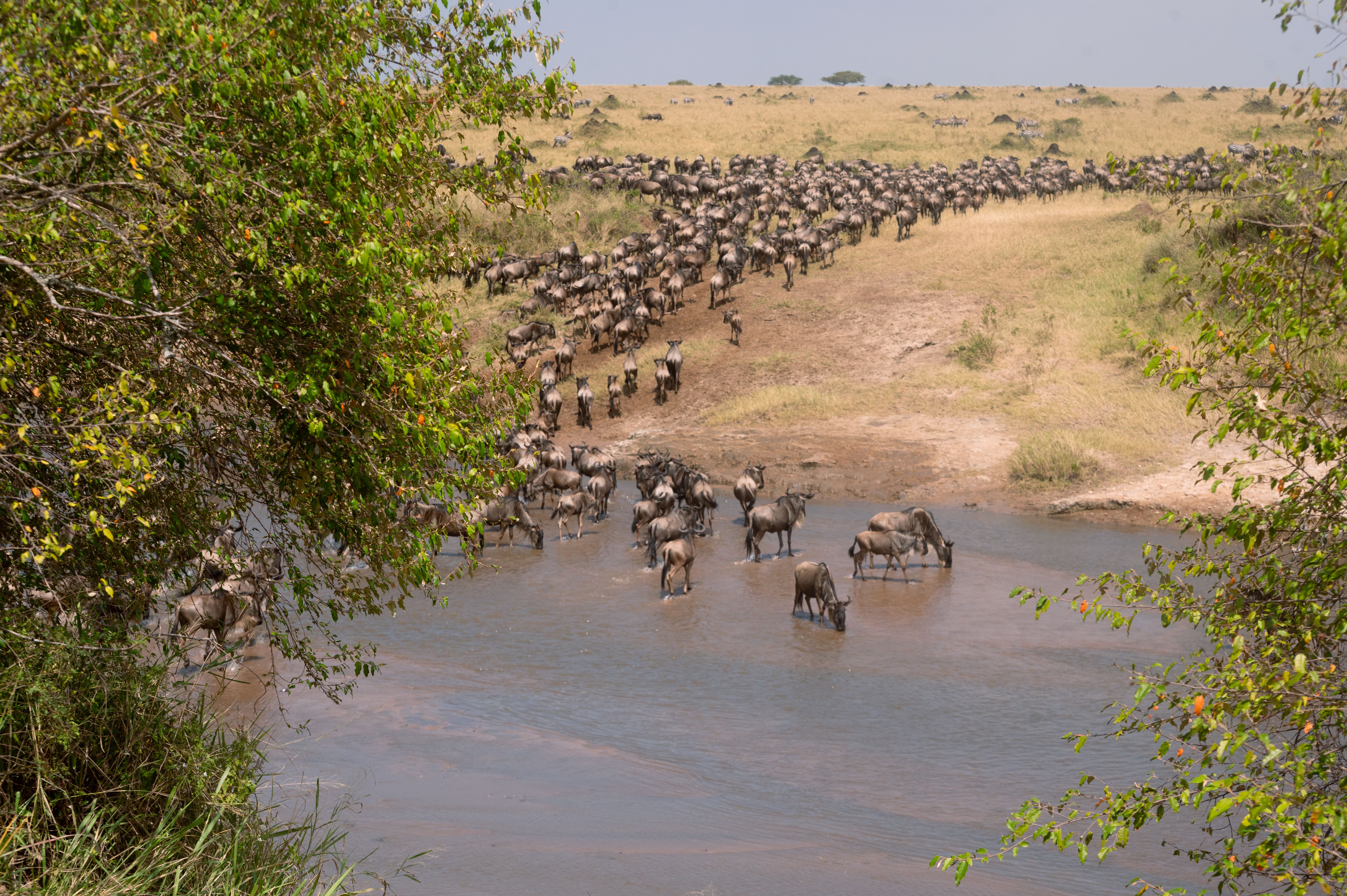
The Annual Journey of the Great Migration Across the Serengeti
The annual migration follows a broad seasonal movement across the Serengeti-Mara ecosystem. Although the general pattern is understood, the precise location of the herds can change from one year to another depending on rainfall and environmental conditions. The journey is commonly divided into different stages, each associated with particular regions and wildlife experiences.
The Southern Serengeti and Ndutu Plains
The southern Serengeti and the Ndutu region are among the most important locations in the migration cycle. These areas contain extensive short-grass plains that become especially productive following seasonal rainfall. The nutrient-rich grass provides valuable feeding opportunities for pregnant female wildebeest and supports the large herds that gather in the region during the early months of the year.
Between December and March, large concentrations of migrating animals can generally be found around the southern Serengeti and Ndutu plains. This period is particularly associated with the calving season, when enormous numbers of wildebeest give birth within a relatively short period. The open landscape allows visitors to observe large herds spread across the plains, while predators become more active in areas where vulnerable young animals are present.
Ndutu is therefore one of the most popular destinations for travellers interested in witnessing the birth of wildebeest calves and observing the relationship between predators and prey. The region also offers opportunities to see zebras, gazelles, lions, cheetahs, hyenas and numerous bird species.
Central Serengeti and the Transition Period
As the seasonal conditions change, migrating herds gradually begin moving away from the southern plains. Central Serengeti, particularly the wider Seronera region, becomes an important area along the migration route. This region is known for its varied habitats, including open grasslands, rocky kopjes, river valleys and areas of woodland.
The movement through central Serengeti can be particularly interesting because visitors may encounter both migrating animals and resident wildlife. Lions, leopards, cheetahs, elephants, giraffes and buffaloes inhabit this region throughout the year. This means that a safari in central Serengeti can provide excellent wildlife experiences even when the main migrating herds are moving through other sections of the ecosystem.
During April and May, the herds generally begin moving towards central and western parts of the Serengeti. The long rainy season can influence road conditions and the distribution of animals, making it important to plan accommodation and safari routes carefully.
The Western Corridor and Grumeti Region
The Western Corridor forms another important stage of the migration journey. Located in the western part of Serengeti National Park, this region contains open grasslands, woodland habitats and river systems that provide important resources for wildlife. As the migrating herds move through the corridor, they gradually approach the Grumeti River, one of the major waterways associated with the migration.
Around May, June and July, depending on rainfall and herd movement, large groups of wildebeest and zebras may gather in the Western Corridor. The region offers opportunities to observe animals travelling in long columns across the landscape, while resident predators and other wildlife species remain active in the surrounding habitats.
The Grumeti River is particularly important because it forms a natural obstacle along the migration route. Some migrating animals must cross the river as they continue towards northern grazing areas. This creates another remarkable wildlife experience, although the timing and location of crossings are unpredictable.
Northern Serengeti and the Mara River
Northern Serengeti is one of the most famous destinations for the Great Migration, particularly during the dry season. Areas around Kogatende and the Mara River become important locations as migrating herds move northwards in search of fresh grazing. The landscape is characterised by rolling hills, open grasslands, woodland areas and riverine vegetation.
Between approximately July and October, large concentrations of wildebeest and zebras may be found in northern Serengeti, depending on seasonal conditions. Some herds move towards the Mara River and may cross between Tanzania and Kenya as part of their wider migration journey.
This period attracts many international travellers because of the possibility of witnessing the famous Mara River crossings. However, the migration does not remain in one location throughout the season. Herds may cross the river more than once, move in different directions or remain in particular areas depending on rainfall and the availability of grass.
As the year progresses and seasonal rainfall returns to southern regions, the herds generally begin their journey southwards. They gradually move through northern, eastern and central areas before approaching the southern plains again. This completes the broad annual migration cycle and prepares the animals for another calving season.
The Great Wildebeest Calving Season in Ndutu
The calving season is one of the most important and fascinating stages of the Great Migration. It takes place mainly across the southern Serengeti and Ndutu plains, where large herds gather in areas containing nutrient-rich short grass. These grasslands provide suitable feeding conditions for female wildebeest during pregnancy and after giving birth.
The main calving period generally occurs between January and March, with February commonly considered one of the most important months. During this time, hundreds of thousands of wildebeest calves may be born across the southern plains. A large proportion of births take place within a relatively concentrated period, creating an extraordinary natural event that attracts wildlife enthusiasts and photographers.
Newborn wildebeest calves are adapted to stand and move shortly after birth. This ability is essential because the herds are constantly exposed to changing environmental conditions and potential predators. Remaining close to their mothers and moving together with the herd helps young animals navigate the open grasslands.
The calving season also attracts large numbers of predators. Lions, cheetahs, spotted hyenas and other carnivores follow the migrating herds, taking advantage of the seasonal abundance of prey. This creates opportunities for visitors to observe different aspects of wildlife behaviour, including hunting strategies, territorial activities and interactions between predators and herbivores.
For wildlife photographers, the southern plains offer excellent opportunities to capture images of newborn calves, large herds, predators and the beautiful landscapes of the green season. The combination of open grasslands, seasonal vegetation and dramatic skies creates an especially attractive environment for wildlife photography.
Ndutu is particularly valuable because it lies within the wider ecosystem connecting the southern Serengeti and Ngorongoro Conservation Area. Its location allows migrating animals to move between different grazing areas while benefiting from the seasonal vegetation of the southern plains.
Travellers interested in the calving season should consider planning their safari between January and March, with particular attention to February. However, the exact distribution of animals and the timing of births can vary depending on rainfall and other environmental factors.
Best recommendation: Choose the Ndutu and southern Serengeti region if your main interest is witnessing wildebeest calving, large concentrations of migrating herds and predator activity during the early months of the year.
The Grumeti River Crossing and Its Importance to the Migration
The Grumeti River is one of the most important natural features along the migration route in western Serengeti. It forms part of the Western Corridor, a region that becomes increasingly important as migrating wildebeest and zebras move away from the southern plains towards northern grazing areas. The river provides water for wildlife throughout the year and supports a rich ecosystem that includes hippos, crocodiles, birds and other animals.
As large herds approach the Grumeti River, they may gather along its banks before attempting to cross. Their movement is influenced by the surrounding landscape, the availability of suitable grazing and the conditions of the river itself. Some groups may cross quickly, while others remain in the area for longer periods before continuing their journey.
The river is also known for its population of large Nile crocodiles. These reptiles inhabit the water and form part of the natural predator-prey relationships associated with the migration. The presence of crocodiles makes the river an important ecological feature and adds to the interest of observing the movement of animals through the Western Corridor.
The Grumeti region is not only about river crossings. Its surrounding landscapes offer opportunities to observe resident wildlife, including lions, elephants, giraffes, buffaloes, antelopes and a variety of bird species. The combination of river habitats, open plains and woodland areas makes this region a rewarding destination for travellers interested in exploring different aspects of Serengeti wildlife.
June and July are commonly associated with migration activity in the Western Corridor, although the exact timing varies. Visitors who want to experience this stage of the migration should consider an itinerary that includes sufficient time in the western part of Serengeti rather than relying on a brief visit.
For travellers seeking an alternative to the more widely publicised Mara River crossings, the Grumeti region provides an interesting opportunity to experience another important stage of the Great Migration.
The Famous Mara River Crossing in Northern Serengeti
The Mara River crossing is one of the most recognised highlights of the Great Wildebeest Migration and a major reason why travellers visit northern Tanzania during the dry season. Located within the wider Serengeti-Mara ecosystem, the river forms an important geographical obstacle along the migration route as large herds move between northern Serengeti and Kenya's Maasai Mara region.
As migrating animals approach the riverbanks, thousands of wildebeest and zebras may gather in the surrounding grasslands. The herds often move towards the water, stop, change direction or wait for suitable conditions before attempting to cross. Their behaviour is influenced by the landscape, river conditions and the movements of other animals within the herd.
The crossing itself is a remarkable demonstration of animal behaviour. Large groups of wildebeest enter the water and attempt to reach the opposite bank while maintaining contact with other members of the herd. Zebras may also participate in these movements, creating a spectacular scene involving different species travelling together.
The Mara River supports a rich aquatic ecosystem, including Nile crocodiles and hippos. Crocodiles are natural predators within the river environment, while hippos spend much of their time in the water. The surrounding riverbanks also attract birds and other wildlife species, making the area important beyond the migration itself.
One of the most interesting aspects of the Mara River crossings is their unpredictability. There is no fixed schedule that determines when a herd will cross. Animals may gather along the river for hours or even longer before deciding to move. Sometimes they cross at different points along the river, while in other situations they may turn away and continue searching for another route.
This uncertainty is part of what makes the experience special. Visitors must understand that witnessing a river crossing is a natural wildlife event rather than a scheduled tourist activity. Spending several days in the northern Serengeti can improve the opportunity to observe the herds and experience the region's wildlife.
The period between July and September is particularly popular for travellers interested in the Mara River crossings, although opportunities may continue into October depending on rainfall and the movement of the herds. Areas around Kogatende and Lamai are among the important locations to consider when planning a northern Serengeti migration safari.
For many visitors, seeing thousands of wildebeest moving across the river represents one of the most memorable moments of an African safari. However, northern Serengeti also offers excellent opportunities to observe lions, leopards, elephants, giraffes and other resident wildlife in a beautiful and relatively remote landscape.
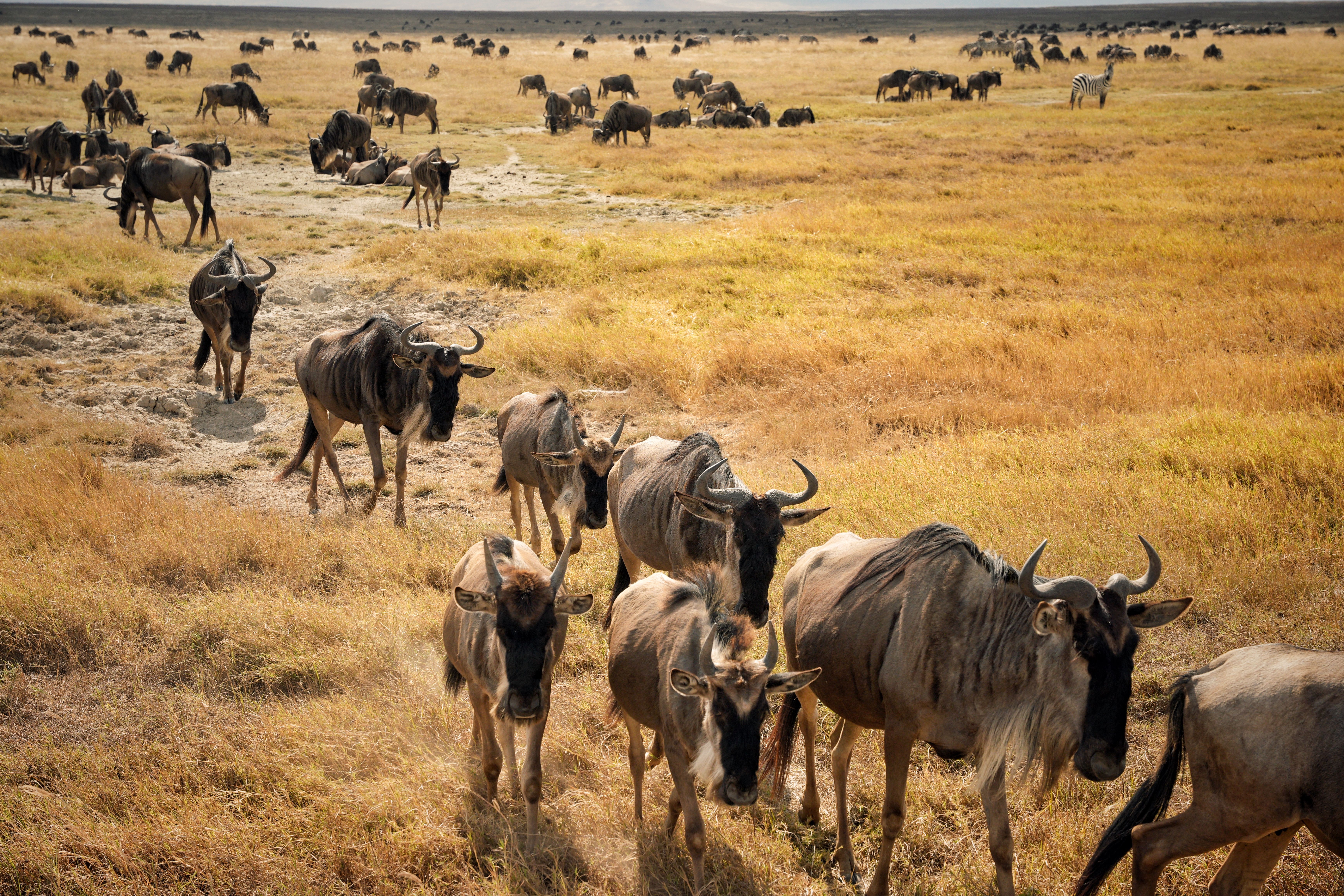
Best Time to See the Great Migration in Tanzania
The best time to experience the Great Migration depends on the particular wildlife event you want to witness. Since the migration takes place throughout the year, there is no single month that is best for every traveller. Some months are particularly suitable for observing wildebeest calving, while others provide better opportunities to follow the large herds as they move through central and western Serengeti or approach the Mara River.
January, February and March are particularly important for visitors interested in the calving season. During these months, large herds gather around Ndutu and the southern Serengeti, where the short-grass plains provide valuable feeding opportunities. February is commonly recognised as a peak period for wildebeest births, although the exact timing can change according to rainfall.
April and May are generally associated with the transition from the southern plains towards central and western Serengeti. The long rainy season can make some roads more challenging, but the landscape becomes green and attractive. These months may also offer a quieter safari experience compared with the busiest dry-season periods.
June and July are important for visitors interested in the Western Corridor and Grumeti region. The migrating herds gradually move towards western and northern parts of the ecosystem, and opportunities to observe river-related wildlife activity may occur.
July, August and September are particularly popular among travellers hoping to witness the famous Mara River crossings. Northern Serengeti becomes a major migration destination during this period, with areas around Kogatende and the Mara River attracting large concentrations of wildlife.
October can still provide opportunities to experience northern migration activity, although the herds may gradually begin moving towards eastern and central areas as seasonal conditions change. November and December are generally associated with the southward movement of the herds as short rains encourage fresh grass to grow across the southern plains.
Great Migration Month-by-Month Guide
The table below provides a general guide to the expected migration locations and the experiences travellers may encounter throughout the year. These periods are approximate because the movement of wildlife depends on natural rainfall patterns and cannot be guaranteed on exact dates.
| Month | Expected Location | Migration Experience |
|---|---|---|
| January | Ndutu and Southern Serengeti | Large herds gather across the southern plains as the calving season develops. |
| February | Ndutu and Southern Serengeti | Peak wildebeest calving period, newborn calves and increased predator activity. |
| March | Southern Serengeti | Calving continues while herds gradually prepare for seasonal movement. |
| April | Southern and Central Serengeti | Herds begin moving towards central areas as rainfall and vegetation change. |
| May | Central and Western Serengeti | Large migrating columns move towards the Western Corridor. |
| June | Western Corridor and Grumeti | Migration movement towards the Grumeti River and possible crossing opportunities. |
| July | Western and Northern Serengeti | Herds move towards northern grazing areas, with possible early Mara River crossings. |
| August | Northern Serengeti | Popular period for witnessing Mara River crossing activity. |
| September | Northern Serengeti | Continued migration activity and possible river crossings. |
| October | Northern and Eastern Serengeti | Late-season northern activity and gradual movement towards eastern areas. |
| November | Eastern and Central Serengeti | Herds generally begin moving south as short rains return. |
| December | Southern Serengeti and Ndutu | Herds return towards southern grazing areas as the next calving season approaches. |
Our recommendation: Choose January to March if your main interest is wildebeest calving. Choose June to July if you want to explore the Western Corridor and Grumeti region. Consider July to September if your main dream is to experience the Mara River crossings in northern Serengeti. Always allow flexibility because the herds do not follow fixed dates.
Where to Experience the Great Migration in Tanzania
Choosing the right location is one of the most important decisions when planning a Great Migration safari. The Serengeti is an enormous ecosystem, and different regions become important at different stages of the year. Travellers should therefore select their safari destination according to their preferred travel dates and the wildlife experience they want to enjoy.
Ndutu and Southern Serengeti
Ndutu and the southern Serengeti are particularly important between December and March. Their short-grass plains support large concentrations of wildebeest and zebras during the calving season. The open landscapes make it possible to observe large herds, newborn calves and predators moving through the grasslands. This region is especially recommended for visitors interested in photography and the natural behaviour of migrating animals.
Central Serengeti
Central Serengeti is an excellent region for visitors who want to experience a combination of migrating wildlife and resident animals. The Seronera area is particularly known for its year-round wildlife, including lions, leopards and cheetahs. Depending on the season, visitors may also encounter migrating herds travelling through the central plains as they move between southern and western areas.
Western Corridor and Grumeti
The Western Corridor is particularly relevant during the middle part of the year when migrating herds move towards the Grumeti River. This region offers a combination of riverine habitats, open grasslands and woodland areas. Travellers interested in observing the movement of the herds and exploring the Grumeti River environment should consider including this region in their safari itinerary during the appropriate season.
Northern Serengeti and Kogatende
Northern Serengeti is one of the most popular locations for the Great Migration during the dry season. Kogatende and surrounding areas provide access to important sections of the Mara River and northern migration routes. The region is especially attractive between July and October, when large herds may move through the area and river crossing opportunities can occur.
Because the northern Serengeti is relatively remote compared with some central safari areas, travellers should allow sufficient time for game drives and wildlife observation. Accommodation should ideally be selected according to the expected location of the herds during the travel period.
Wildlife and Photography Experiences During the Great Migration
Although the migrating wildebeest are the main attraction, a Great Migration safari also offers opportunities to experience the wider wildlife diversity of Serengeti National Park. The ecosystem supports an impressive variety of mammals, birds, reptiles and other wildlife species that inhabit its grasslands, rivers, woodlands and rocky landscapes.
Lions are among the most frequently sought-after animals during a Serengeti safari. These powerful predators inhabit different regions of the ecosystem and are often observed resting in the shade, moving through the grasslands or interacting within their prides. The presence of migrating herds provides important feeding opportunities, making the Serengeti a fascinating place to learn about lion behaviour.
Cheetahs are another important attraction, particularly in open grassland habitats where they can use their speed and excellent eyesight when hunting. Their slender bodies and distinctive markings make them particularly interesting subjects for wildlife photography. Leopards are more secretive and are often associated with woodland areas, riverine vegetation and trees where they can rest or conceal themselves.
Spotted hyenas are highly adaptable animals that play an important role in the Serengeti ecosystem. They are both skilled hunters and scavengers and can often be observed around areas where large concentrations of herbivores are present. Their social behaviour and communication make them interesting animals to observe during game drives.
Beyond predators, visitors may encounter elephants, giraffes, buffaloes, topis, impalas, warthogs and many other species. Birdlife is also an important part of the experience, with eagles, vultures, ostriches, secretary birds and numerous other species inhabiting different parts of the ecosystem.
Photography is one of the most rewarding activities during a Great Migration safari. The large herds create opportunities for wide landscape photographs, while individual animals provide opportunities for detailed wildlife portraits. Early morning and late afternoon are particularly attractive times for photography because the softer natural light creates beautiful conditions across the grasslands.
Travellers interested in photography should consider spending several days in the same migration region rather than moving between different locations every day. This allows more time to observe animal behaviour, understand the local environment and wait for interesting wildlife encounters to develop naturally.

How to Plan a Successful Great Migration Safari
Planning a Great Migration safari requires careful consideration of your travel dates, preferred migration region, accommodation and the amount of time you want to spend exploring the Serengeti. Because the herds move throughout the year, the most effective approach is to begin with the wildlife experience you want to see and then select the appropriate region for that season.
The first step is deciding whether you are more interested in the calving season, the movement of the herds through the Western Corridor or the famous Mara River crossings. This decision helps determine whether your itinerary should focus on Ndutu, central Serengeti, Grumeti or northern Serengeti. Travellers who are flexible with their dates may have more opportunities to choose a safari period that matches their interests.
The duration of your safari is another important consideration. A migration-focused trip should ideally allow enough time to explore the selected region without rushing between different locations. A journey of approximately five to seven days can be a useful starting point, although longer itineraries may be more suitable for travellers who want to explore several Serengeti regions and additional national parks.
Accommodation should also be selected according to the location of the migrating herds. Safari lodges and tented camps are available in different parts of the Serengeti, including the southern plains, central region, Western Corridor and northern Serengeti. Staying in the appropriate region reduces unnecessary travel time and allows visitors to spend more time enjoying wildlife activities.
Travellers should also consider the type of safari vehicle and guiding experience they prefer. A private safari offers greater flexibility when planning daily game drives, while a small-group experience may provide a different style of travel. Professional guides play an important role in interpreting animal behaviour, identifying wildlife and helping visitors understand the seasonal movements of the migration.
Packing appropriately is another important part of preparation. Comfortable clothing in neutral colours, a sun hat, sunglasses, sunscreen, comfortable walking shoes and a camera with suitable lenses can make the experience more enjoyable. Travellers should also consider the changing temperatures between early mornings, daytime game drives and evenings in the wilderness.
For international travellers, it is important to confirm travel documentation, entry requirements, health recommendations, insurance arrangements and other practical travel details before departure. These preparations help ensure that the safari experience is comfortable and well organised.
Kili2sere Adventure can help travellers discuss their preferred migration experience, travel dates, accommodation category and safari duration before developing a suitable itinerary. Whether you are interested in the calving season or the famous Mara River crossings, the objective is to plan a journey that matches your expectations and makes the most of your time in Tanzania.
Frequently Asked Questions About the Great Migration
What exactly is the Great Wildebeest Migration?
The Great Wildebeest Migration is the annual movement of more than a million wildebeest, together with large numbers of zebras and gazelles, across the Serengeti-Mara ecosystem in search of fresh grazing and water. It is a continuous natural cycle influenced by seasonal rainfall and vegetation.
What is the best month to see the Great Migration?
The best month depends on your preferred experience. February is particularly important for the wildebeest calving season in Ndutu, while August and September are popular months for travellers hoping to witness Mara River crossing activity in northern Serengeti.
Where does the Great Migration take place?
The migration takes place across the Serengeti-Mara ecosystem, which includes Tanzania's Serengeti National Park and Kenya's Maasai Mara ecosystem. Most of the annual migration cycle takes place within Tanzania.
Can I see the Great Migration throughout the year?
Yes. The migration is a continuous annual movement. However, the location of the herds and the wildlife experiences available change according to the season.
Are Mara River crossings guaranteed?
No. Mara River crossings are unpredictable natural events. Herds may gather near the river for extended periods before crossing, and they may also cross at different locations. Spending several days in northern Serengeti can improve your opportunities.
How many days should I spend on a Great Migration safari?
Approximately five to seven days can provide a useful starting point for a migration-focused safari. However, the ideal duration depends on your preferred region, travel schedule and whether you want to combine the migration with other destinations.
Is Ndutu a good place to experience the Great Migration?
Yes. Ndutu is one of the most important destinations during the calving season, particularly between January and March. Visitors can experience large herds of wildebeest and zebras, newborn calves and increased predator activity.
Can I combine the Great Migration with other Tanzania destinations?
Yes. A Great Migration safari can be combined with destinations such as Ngorongoro Conservation Area, Tarangire National Park and Lake Manyara National Park, depending on your itinerary and available time.
Can I book a private Great Migration safari?
Yes. You can submit your travel preferences through the inquiry form below so that Kili2sere Adventure can discuss your preferred dates, migration region, number of travellers and accommodation requirements.
Plan Your Great Migration Safari in Tanzania
Are you dreaming of witnessing the incredible wildebeest migration across the Serengeti? Whether you want to experience the calving season in Ndutu, explore the Western Corridor or witness the famous Mara River crossings, Kili2sere Adventure is ready to help you plan your journey.
Complete the form below with your travel details and preferred Great Migration experience. Providing accurate information will help our team understand your requirements and prepare a suitable safari proposal.