
Meet the Maasai. Discover a Living Culture.
Step beyond the safari and experience Tanzania through the people, traditions, stories, and everyday life of Maasai communities.
The Maasai are one of the most recognisable pastoral communities in East Africa, with a strong cultural presence across northern Tanzania and southern Kenya. For generations, Maasai communities have developed a way of life deeply connected to livestock, family, community, and the natural environment that surrounds them. Cattle, goats, and sheep have traditionally played an important role in everyday life, providing food, supporting livelihoods, and representing an important part of social and cultural identity. Beyond their distinctive red shukas, colourful beadwork, traditional dances, and recognisable ceremonies, Maasai culture is shaped by values of community, respect, hospitality, responsibility, and the passing of knowledge from one generation to the next. Their close relationship with the land has also influenced how communities understand seasons, water, wildlife, grazing areas, and the importance of living in balance with their surroundings.
A cultural experience with the Maasai offers an opportunity to look beyond the images commonly associated with the community and discover the people and stories behind the traditions. Visitors may have the opportunity to meet Maasai families, learn about traditional homes and daily activities, discover the meaning behind different forms of clothing and beadwork, listen to stories about community history and customs, and experience traditional music and dancing in a respectful setting. Depending on the community and experience, visitors may also learn about traditional approaches to livestock keeping, local plants, food preparation, crafts, and the ways knowledge is shared between generations. These encounters provide a more personal understanding of how Maasai traditions are connected to everyday life rather than simply being cultural performances created for visitors.
What makes meeting the Maasai particularly meaningful is the opportunity to engage with a living culture that continues to change. While many traditional practices remain important, Maasai communities today also interact with modern education, technology, tourism, changing economic opportunities, and new ways of communicating with the wider world. This creates a culture that is both rooted in its history and responsive to the present. A visit therefore becomes more than a chance to take photographs or watch a traditional dance; it becomes an opportunity to listen, ask questions, share experiences, and appreciate the diversity of life in northern Tanzania. Through genuine and respectful interaction, travellers can gain a deeper appreciation of Maasai heritage and the generations of knowledge, identity, and community values that continue to shape it.
A Different Way to Experience Northern Tanzania
A Tanzania safari can take you into some of the world’s most remarkable wildlife areas. But beyond the national parks and endless plains are communities whose lives are closely connected to the landscapes surrounding them.
A Maasai cultural experience gives you an opportunity to step into that world.
You may walk through a community, learn about traditional homes, meet local families, discover handmade crafts, hear stories about Maasai life, or share moments of music and dance.
The experience is not simply about watching. It is about connecting, learning, and understanding.
Meet Local Maasai Communities
Spend time with community members and learn about everyday life, traditions, family structures, and the values that shape the community.
Discover Maasai Traditions
Learn about customs, ceremonies, clothing, music, dance, and traditions that continue to play a role in community life.
Visit a Traditional Boma
Explore a traditional Maasai homestead and learn about the way homes are constructed, how families live, and how livestock forms an important part of daily life.
Experience Music & Dance
Experience traditional songs and dances and learn about their role in community gatherings, celebrations, storytelling, and cultural expression.
Explore Maasai Crafts
Discover handmade beadwork, jewellery, ornaments, and other crafts while meeting artisans and learning about the meaning and skills behind their work.
Learn About Pastoral Life
Gain an insight into the relationship between Maasai communities, livestock, land, and traditional pastoral practices.
The Maasai relationship with the land is an important part of understanding their way of life.
For generations, pastoralism has shaped how many Maasai communities organize daily life, move with livestock, use natural resources, and interact with their surrounding environment.
During a cultural experience, your local hosts can help you understand these relationships from their own perspective — providing context that cannot be captured by simply passing through a community on the way to a safari destination.
The most meaningful cultural encounters are often found in simple moments.
A conversation with a community member.
Learning how a traditional home is built.
Watching an artisan create beadwork.
Sharing food.
Listening to a story.
Learning a traditional song.
These moments may seem simple, but they can change the way you understand the destination.
Experience Culture With Respect
Cultural tourism should benefit both visitors and the communities they meet.
We encourage experiences built around respectful interaction, local participation, and genuine learning. Guests are encouraged to listen, ask questions, respect local customs, and always seek permission before photographing people or participating in cultural activities.
Where possible, we work with local guides, hosts, artisans, and community-based partners so that cultural experiences can create meaningful opportunities for local participation.
Our Principles
Respect — Approach people, traditions, and customs with openness.
Listen — Give communities space to share their own stories.
Learn — Ask questions and discover culture through meaningful interaction.
Support — Choose experiences that involve local people and businesses.
Protect — Respect cultural practices and the environment surrounding communities.
Arusha Area
Arusha is one of the main gateways to experiencing Maasai culture in northern Tanzania, offering travellers opportunities to connect with Maasai communities both around the city and in the surrounding rural areas. The region is home to Maasai families and communities whose traditional way of life remains closely connected to livestock, land, family, and community values, while also adapting to modern life. Cultural experiences around Arusha can include visiting a Maasai village or community, meeting local families, learning about traditional homes and daily activities, and discovering the meaning behind Maasai clothing, beadwork, music, and ceremonies. Visitors may also have the opportunity to hear stories about Maasai history, learn how traditional knowledge is passed between generations, and understand the community’s relationship with the surrounding landscape. Because Arusha is also a major starting point for safaris and Kilimanjaro adventures, a Maasai cultural experience can easily be incorporated into a wider northern Tanzania itinerary, providing travellers with a meaningful cultural dimension alongside wildlife and mountain experiences.
Mto wa Mbu
Mto wa Mbu is one of the most interesting places in northern Tanzania to experience Maasai culture while also discovering the wider cultural diversity of the region. Located near the entrance to Lake Manyara National Park and along the route connecting Arusha with the Ngorongoro Conservation Area and Serengeti, the town provides opportunities to meet Maasai people and learn about aspects of their traditional lifestyle in a community setting.
A visit may include exploring a Maasai boma, learning about traditional houses, livestock keeping, beadwork, clothing, food, music, and the importance of family and community in Maasai society. Travellers can also hear stories about how Maasai communities have traditionally interacted with their environment and adapted their livelihoods to the changing conditions of northern Tanzania. What makes Mto wa Mbu particularly valuable is the opportunity to experience Maasai culture alongside other local traditions, as the area is known for its diverse communities, agricultural activities, local markets, and cultural experiences.
This allows visitors to see that Maasai culture is part of a much broader and diverse cultural landscape rather than an isolated attraction, making a visit to Mto wa Mbu a natural addition to a safari through Lake Manyara, Ngorongoro, and the surrounding areas.
Ngorongoro Area
The Ngorongoro Area offers one of the most meaningful opportunities to learn about Maasai culture in northern Tanzania because Maasai communities have lived and practised pastoral traditions within and around the Ngorongoro landscape for generations.
A cultural visit may include meeting Maasai families, entering a traditional boma, seeing how homes are constructed from locally available materials, learning about cattle and other livestock, and discovering the significance of beadwork, clothing, songs, dances, and community ceremonies. Travellers can also hear local stories and perspectives about life in the area and gain a better understanding of how traditional knowledge is passed from elders to younger generations. What makes the Ngorongoro experience particularly distinctive is the surrounding landscape, where Maasai pastoralism exists alongside one of Tanzania’s most important wildlife conservation areas.
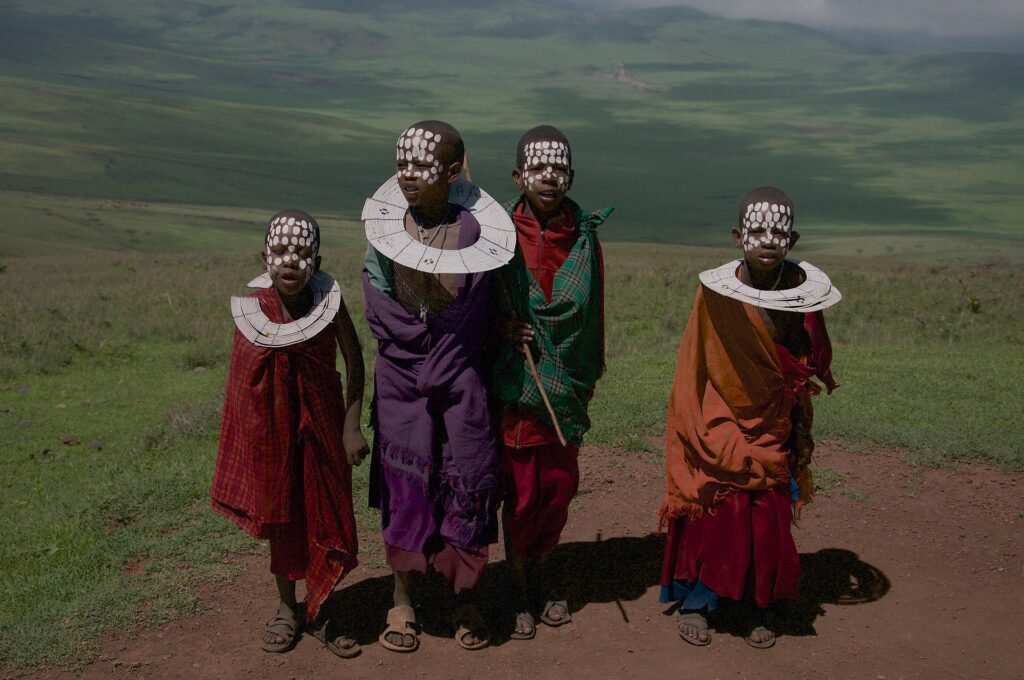
Rather than simply observing cultural traditions from a distance, a respectful visit provides an opportunity to meet community members, ask questions, listen to their experiences, and understand how Maasai identity and traditions continue to develop while remaining connected to their heritage and the land.
Northern Tanzania
Northern Tanzania is one of the most culturally diverse regions in the country and provides travellers with several opportunities to experience Maasai culture as part of a safari or cultural journey. Maasai communities are found across different parts of the region, particularly around areas associated with the Great Rift Valley, Ngorongoro, Manyara, and the wider landscapes between Arusha and the Serengeti. Here, visitors can learn about a traditional pastoral way of life that has long been connected to livestock, family, community, and the natural environment.
Depending on the location and community, experiences may include visiting a traditional Maasai boma, meeting local families, learning about livestock keeping, traditional houses, beadwork and crafts, listening to cultural stories, and experiencing traditional songs and dances. Travellers may also gain insight into how Maasai communities understand their surroundings, including the importance of water, grazing land, wildlife, and seasonal changes. Experiencing Maasai culture across Northern Tanzania is not limited to one particular village or attraction; it is an opportunity to understand how Maasai traditions form part of the wider cultural landscape of the region.
When approached respectfully and through genuine community-based experiences, these encounters allow visitors to listen, learn, and appreciate a living culture whose traditions continue to evolve while remaining strongly connected to its history and generations of shared knowledge.
Important: We should avoid implying that every Maasai community offers the same experience. Each community is different, and experiences should be described according to the specific local hosts and activities available.
Kilimanjaro + Maasai Culture
Add a cultural experience before or after your trek.
Safari + Maasai Culture
Combine wildlife with meaningful community interaction.
Arusha + Maasai Culture
Turn your time around Arusha into a deeper introduction to northern Tanzania.
Zanzibar + Maasai Culture
Experience two very different sides of Tanzania — mainland traditions and Swahili coastal culture.
Yes. Many experiences can be suitable for families and provide children with an opportunity to learn about different lifestyles, traditions, food, crafts, and community life.
Photography may be possible, but visitors should always ask permission before photographing people, homes, ceremonies, or personal activities. Your guide will help you understand appropriate practices.
Yes. Private cultural experiences can be arranged depending on the community, availability, group size, and your travel itinerary.
Yes. Maasai cultural experiences can often be incorporated into northern Tanzania safari itineraries, depending on the route and location.
Experiences can range from a few hours to a full day, while longer cultural itineraries can be arranged depending on your interests and overall trip plan.
Depending on the experience and local arrangements, visitors may have opportunities to interact with community members and learn about everyday life. The exact activities vary between communities.
Comfortable and respectful clothing is recommended. Your guide can provide specific advice depending on the community and activities planned.
The approach should focus on respectful interaction, local participation, and meaningful community involvement. We encourage travellers to follow local customs and support experiences that provide opportunities for local hosts and businesses.
Discover the Maasai Through a Different Kind of Journey
Meet the people. Listen to their stories. Experience living traditions and discover a side of Tanzania that cannot be found on a safari map alone.