
Best Time to Climb Kilimanjaro
When to Go, What to Expect & How to Choose Your Season
| Best Overall | Wettest | Quietest | Best for Clear Views |
|---|---|---|---|
|
January–March & June–October |
April–May & November |
Rainy/shoulder periods |
Dry seasons |
The best time to climb Mount Kilimanjaro is generally during Tanzania’s dry seasons, from January to early March and from late June to October. During these months, the mountain usually experiences clearer skies, less rainfall, and more favorable trail conditions, making the climb more comfortable and increasing the chances of enjoying spectacular views from the higher slopes and summit.
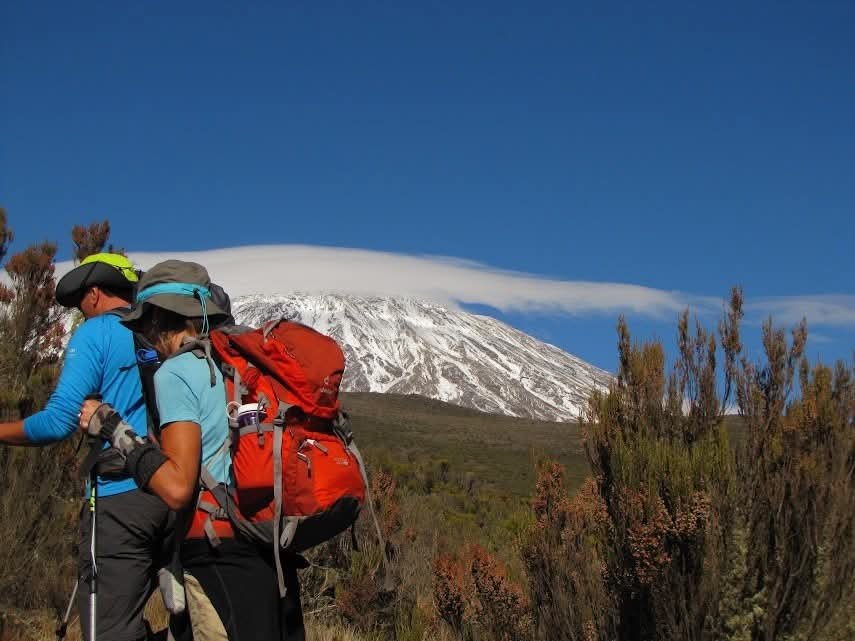
☀️ January to March — Warm, Clear & Less Crowded
January and February are among the most favorable months for climbing Kilimanjaro. The weather is generally warm at lower elevations, skies can be clear, and visibility is often excellent. This period can also be a good choice for travelers who want a quieter experience compared with the busiest months of the year.
March can still offer good climbing conditions, particularly during the earlier part of the month, although rainfall becomes increasingly possible as the long-rain season approaches.
🏔️ June to October — The Most Popular Climbing Season
Late June through October is widely considered the prime climbing period. The weather is generally drier and more stable, with clear mornings, cooler temperatures, and excellent conditions for trekking. July, August, September, and October are especially popular, so climbers should expect more people on the most popular routes.
For travelers looking for the best combination of dry weather, clear summit views, and reliable trekking conditions, this is often the preferred season.
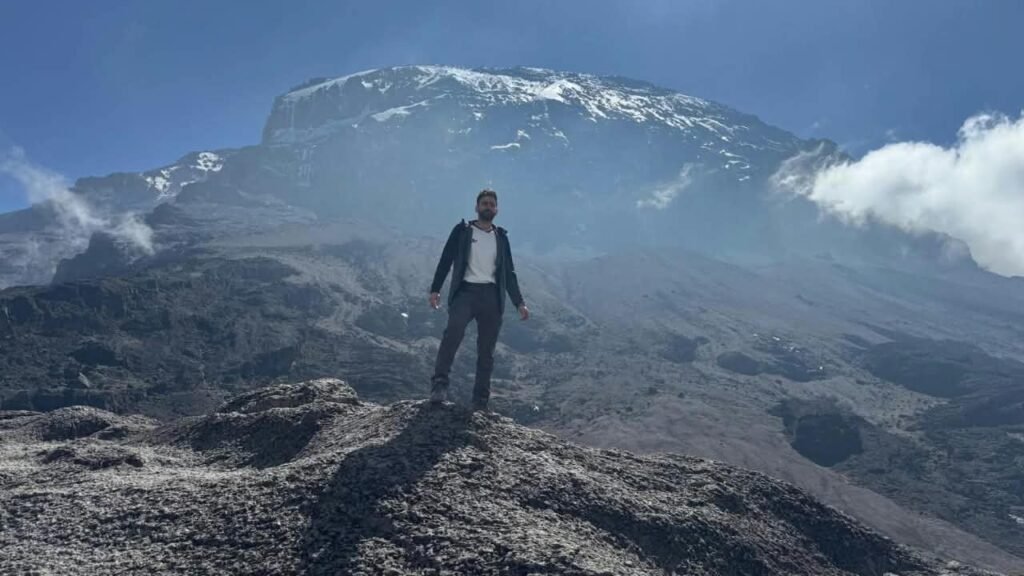
Kilimanjaro can technically be climbed throughout the year, but the rainy seasons can make the experience more challenging. April and May receive the heaviest rainfall, which can result in wet and slippery trails, clouds, and reduced visibility. November also brings a shorter rainy period, making weather conditions less predictable.
That does not mean climbing is impossible during these months. Experienced trekkers who are comfortable with changing weather may still choose to climb, particularly if they prefer fewer people on the mountain. However, for first-time climbers, the drier seasons are generally the safer and more enjoyable choice.
If your priority is the best overall climbing conditions, consider January, February, July, August, September, or October.
If you prefer fewer crowds and good weather, January, February, or early October can be excellent choices.
If your main goal is clear views and the classic Kilimanjaro experience, the dry season from late June to October is a strong choice.
Ultimately, there is no single perfect month for everyone. Your ideal climbing date depends on your preferred weather, crowd levels, route, schedule, and tolerance for changing mountain conditions. Even during the dry season, Kilimanjaro weather can change quickly with altitude, so proper clothing, preparation, and a well-planned itinerary remain essential.
| Month | Weather | Crowds | Overall |
|---|---|---|---|
|
January |
☀️ Dry |
Medium–High |
⭐⭐⭐⭐⭐ |
|
February |
☀️ Dry |
Medium–High |
⭐⭐⭐⭐⭐ |
|
March |
🌦️ Increasing rain |
Low–Medium |
⭐⭐⭐ |
|
April |
🌧️ Wet |
Low |
⭐⭐ |
|
May |
🌦️ Improving |
Low |
⭐⭐⭐ |
|
June |
🌤️ Dry & cool |
Medium |
⭐⭐⭐⭐⭐ |
|
July |
☀️ Dry |
High |
⭐⭐⭐⭐⭐ |
|
August |
☀️ Dry & clear |
High |
⭐⭐⭐⭐⭐ |
|
September |
☀️ Dry & clear |
Medium–High |
⭐⭐⭐⭐⭐ |
|
October |
🌤️ Mostly dry |
Medium |
⭐⭐⭐⭐ |
|
November |
🌦️ Short rains |
Low–Medium |
⭐⭐⭐ |
|
December |
🌦️ Variable |
Medium–High |
⭐⭐⭐⭐ |
Mount Kilimanjaro experiences a wide range of weather conditions as you climb from the warm lower slopes to the cold, high-altitude summit. Understanding rain, temperature, clouds, wind, snow and visibility can help you prepare for a safer and more enjoyable climb.
🌧️ Rain
Rainfall varies significantly depending on the season and altitude. The lower slopes can experience tropical rain, while higher elevations are generally colder and drier. The main rainy seasons are typically March–May and the shorter rains around November.
What to expect: Wet trails • Muddy sections • Changing conditions
🌡️ Temperature
Temperatures change dramatically with altitude. The lower slopes can feel warm during the day, while temperatures drop considerably as you approach the summit. At the summit, temperatures can fall well below freezing, especially at night and during summit attempts.
What to expect: Warm lower slopes • Cold high altitude • Freezing summit conditions
☁️ Clouds & Fog
Clouds and fog are common on parts of Kilimanjaro, particularly in the forest and higher mountain zones. They can reduce visibility and sometimes make the trail feel more challenging. Weather can change quickly as you gain altitude.
What to expect: Misty forests • Cloud cover • Rapid weather changes
💨 Wind
Wind becomes increasingly noticeable at higher elevations. Exposed ridges and the summit zone can experience strong, cold winds, making the temperature feel significantly lower than the actual air temperature.
What to expect: Stronger winds at altitude • Wind chill • Exposed summit conditions
❄️ Snow
Snow and ice can occur around the summit area, particularly during colder periods. The amount of snow varies from season to season and can change with weather conditions. The famous glaciers and remaining ice fields are also part of Kilimanjaro’s high-altitude environment.
What to expect: Ice & snow near the summit • Freezing conditions • Seasonal variation
Lower Slopes
🌿 Warm & Humid
Rainforest Zone
🌧️ Cool, Wet & Cloudy
Moorland Zone
🌤️ Cooler & Drier
Alpine Desert
🏔️ Cold & Dry
Summit Zone
❄️ Freezing, Windy & Thin Air
Mount Kilimanjaro is unique because climbers pass through five distinct climate and vegetation zones as they ascend from the lower slopes toward Uhuru Peak. Each zone has its own landscape, temperature, vegetation, and atmosphere, making the climb feel like a journey through several different worlds.
1. Cultivation Zone
Approx. 800–1,800 m | 2,600–5,900 ft
The journey begins in the lower foothills of Kilimanjaro, where the slopes are influenced by human settlement and agriculture. This zone is characterized by fertile volcanic soils, with local communities cultivating crops such as coffee, bananas, maize, and other food crops.
As you leave the cultivated areas behind, the landscape gradually becomes wilder and the mountain begins to feel more remote.
What to expect:
- Warm temperatures
- Farmland and local villages
- Coffee and banana plantations
- Beautiful views of the surrounding countryside
- Increasingly cooler conditions as altitude rises
2. Rainforest Zone
Approx. 1,800–2,800 m | 5,900–9,200 ft
The rainforest is one of the most beautiful sections of the Kilimanjaro climb. Dense vegetation surrounds the trail, with tall trees, ferns, mosses, and a variety of plant and bird species.
This zone receives considerably more rainfall than the upper slopes, so trails can sometimes be wet and muddy. Mist and clouds are also common, creating a cool and atmospheric environment.
What to expect:
- Dense tropical forest
- High humidity and rainfall
- Cool, shaded trails
- Birds and occasional wildlife
- Moss-covered trees and lush vegetation
3. Heath & Moorland Zone
Approx. 2,800–4,000 m | 9,200–13,100 ft
Above the rainforest, the landscape changes dramatically. Tall trees give way to open heath and moorland, with giant heathers, grasses, shrubs, and distinctive high-altitude plants.
The air becomes noticeably thinner and temperatures begin to drop. This is also where climbers start to experience the effects of altitude more clearly, making a steady pace and proper acclimatization important.
What to expect:
- Open mountain landscapes
- Giant heathers and high-altitude vegetation
- Cooler temperatures
- Increasingly thin air
- Wide views across the surrounding landscape
4. Alpine Desert Zone
Approx. 4,000–5,000 m | 13,100–16,400 ft
The vegetation becomes increasingly sparse as you enter the Alpine Desert. Conditions here are much harsher, with strong sunlight during the day, cold temperatures, and very little rainfall.
The landscape is dominated by volcanic rocks, gravel, and rugged mountain terrain. At this altitude, the dramatic contrast between the barren landscape and the glaciers and snowfields higher up becomes especially striking.
What to expect:
- Very little vegetation
- Rocky and volcanic terrain
- Strong sunlight and cold nights
- Large temperature variations
- Thin, dry air
5. Arctic Zone
Above 5,000 m | 16,400 ft+
The final zone is the Arctic Zone, extending toward the summit of Kilimanjaro. Vegetation is almost completely absent, and the environment is dominated by rock, ice, snow, and extreme high-altitude conditions.
This is the world of Uhuru Peak, the highest point in Africa. Temperatures can fall well below freezing, particularly around summit night, while the low oxygen levels make the final ascent physically demanding.
Reaching this zone is the culmination of the Kilimanjaro experience—a dramatic transition from tropical farmland to an alpine environment near the roof of Africa.
What to expect:
- Freezing temperatures
- Snow and ice depending on conditions
- Almost no vegetation
- Very thin air
- Powerful winds and intense cold
- Spectacular sunrise and panoramic summit views
From Tropical to Arctic
One of the defining features of climbing Kilimanjaro is experiencing this remarkable environmental transition in a single journey:
Cultivation → Rainforest → Heath & Moorland → Alpine Desert → Arctic Zone
This progression is also an important reason why choosing the right season and allowing enough time for acclimatization can make a significant difference to the overall climbing experience.
There is no single “best” month for every climber. The ideal time to climb Mount Kilimanjaro depends on what matters most to you—stable weather, clear views, fewer people on the trails, photography, snow, or spectacular night skies.
☀️ Best for Weather
January–February & July–October
These periods generally offer the most favorable trekking conditions, with relatively drier weather and better trail conditions. January and February are particularly attractive because they combine good weather with generally quieter trails than the main July–September peak.
Best choice: January–February
🏔️ Best for Views
January–February & August–October
For panoramic scenery, clearer skies are a major advantage. During the drier seasons, there are often better opportunities to see the surrounding plains, dramatic mountain landscapes, and distant horizons.
Early mornings are particularly rewarding because clouds often build later in the day.
Best choice: January–February or September–October
🚶 Best for Fewer Crowds
March, June & November
If you prefer a quieter experience, consider periods outside the busiest trekking months. These months can have fewer climbers, creating a more peaceful atmosphere on the mountain.
However, the quieter periods may also come with a greater chance of rain or less predictable mountain weather, so fewer people can mean a trade-off with conditions.
Best choice: June, particularly for travelers seeking a balance between quieter trails and improving weather.
📸 Best for Photography
January–February & September–October
These periods can offer an excellent combination of clearer skies, dramatic landscapes, and changing light across Kilimanjaro’s five climate zones.
Photographers can capture everything from the lush rainforest and giant heathers to the stark Alpine Desert and snow-covered summit areas.
Best choice: January–February
Photography tip: Summit mornings can provide spectacular sunrise opportunities, while clear evenings may reveal an impressive view of the mountain beneath the stars.
❄️ Best for Snow
January–February & September–October
Snow and ice conditions on Kilimanjaro vary from year to year and have declined significantly over the long term. Nevertheless, climbers may still encounter snow and ice around the summit depending on current conditions.
If seeing snow is a priority, choose a traditionally colder period and remember that snow at the summit cannot be guaranteed.
Best choice: January–February
🌌 Best for Stargazing
January–February & June–October
Kilimanjaro’s high-altitude camps can provide exceptional opportunities for stargazing when skies are clear. The combination of high elevation, low light pollution, and remote mountain surroundings creates excellent conditions for observing the night sky.
The clearest nights are often most rewarding during the drier periods, although cloud cover can change quickly in the mountains.
Best choice: January–February or August–October
⭐ Quick Guide
| Priority | Recommended Period |
|---|---|
| ☀️ Best Weather | January–February |
| 🏔️ Best Views | January–February / September–October |
| 🚶 Fewer Crowds | June |
| 📸 Photography | January–February |
| ❄️ Snow | January–February |
| 🌌 Stargazing | January–February / August–October |
The overall sweet spot: January–February is one of the strongest choices if you want to combine good weather, clear views, photography, snow possibilities, and excellent stargazing in one Kilimanjaro adventure.
Although Kilimanjaro’s main trekking seasons generally apply to all routes, each route has its own characteristics. Rainfall, trail exposure, scenery, altitude profile, and crowd levels can make certain months more suitable for one route than another.
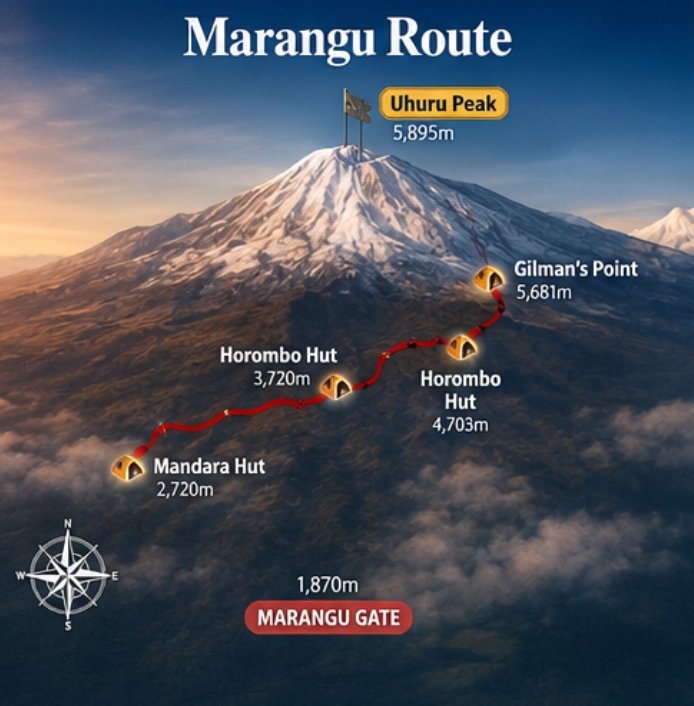
Marangu Route
Best time: January–February & July–October
Marangu is a relatively sheltered route in its lower sections, passing through rainforest before reaching the higher alpine environments. The dry seasons are generally preferable because the lower forest trails can become slippery and muddy during periods of heavier rainfall.
Because Marangu uses mountain huts rather than tents, it can be particularly appealing during periods when weather conditions are less predictable.
Best choice: January–February or September–October
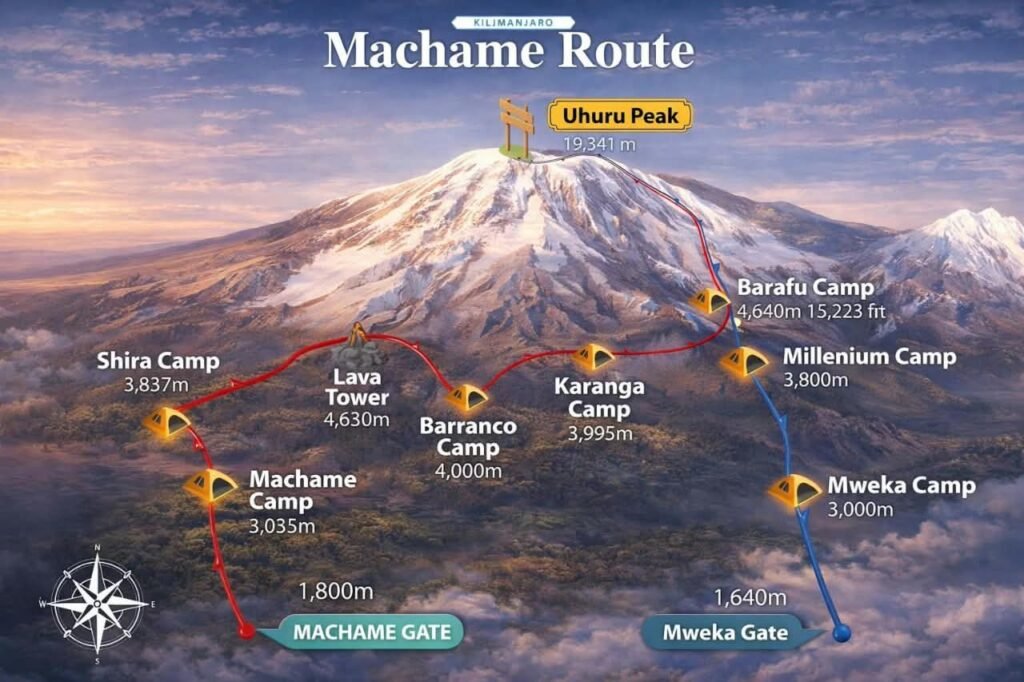
Machame Route
Best time: January–February & July–October
Machame is one of Kilimanjaro’s most scenic routes, crossing several different landscapes and offering dramatic views of the mountain. Dry conditions are especially helpful because some sections can become muddy and slippery after rain.
The route is popular, so choosing the shoulder periods can help you enjoy the scenery with somewhat fewer trekkers.
Best choice: January–February or September
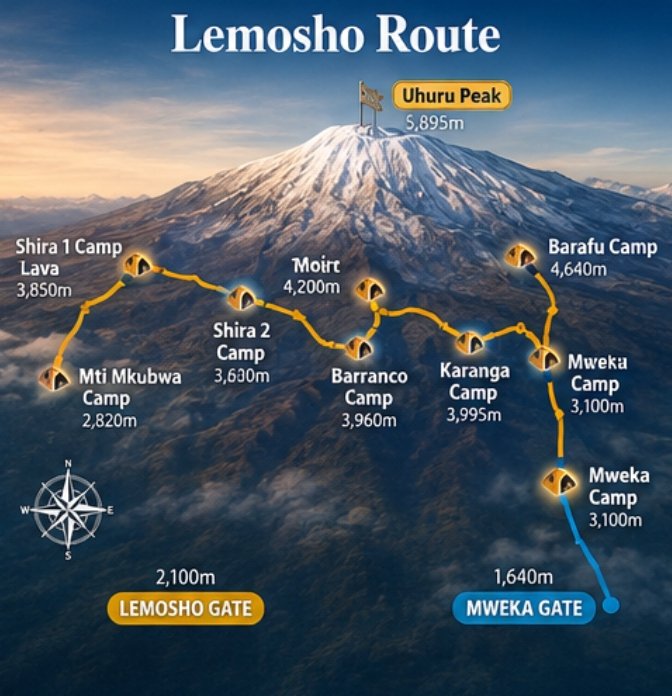
Lemosho Route
Best time: January–February & July–October
Lemosho is known for its beautiful landscapes, gradual approach, and quieter beginning compared with some of the more established routes. The route is particularly rewarding during the dry seasons when visibility is generally better.
Its longer itinerary also provides more time for acclimatization, making it an excellent option for climbers who want to combine scenery with a more gradual ascent.
Best choice: January–February or August–October
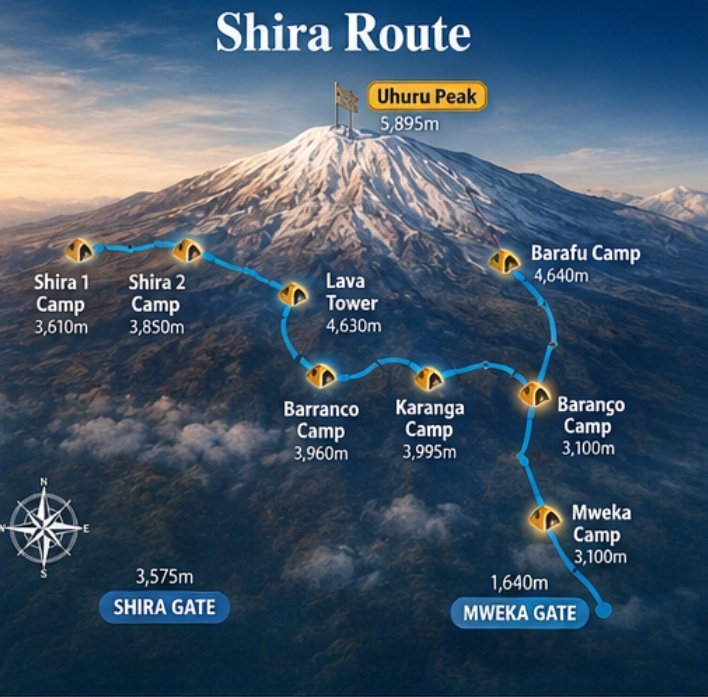
Shira Route
Best time: January–February & July–October
The Shira Route begins at a relatively high elevation, so weather and altitude conditions are important considerations. Dry-season trekking can provide better trail conditions and clearer views across the Shira Plateau.
Because of its high starting point, this route is generally better suited to experienced trekkers who are comfortable with rapid altitude gain.
Best choice: July–October
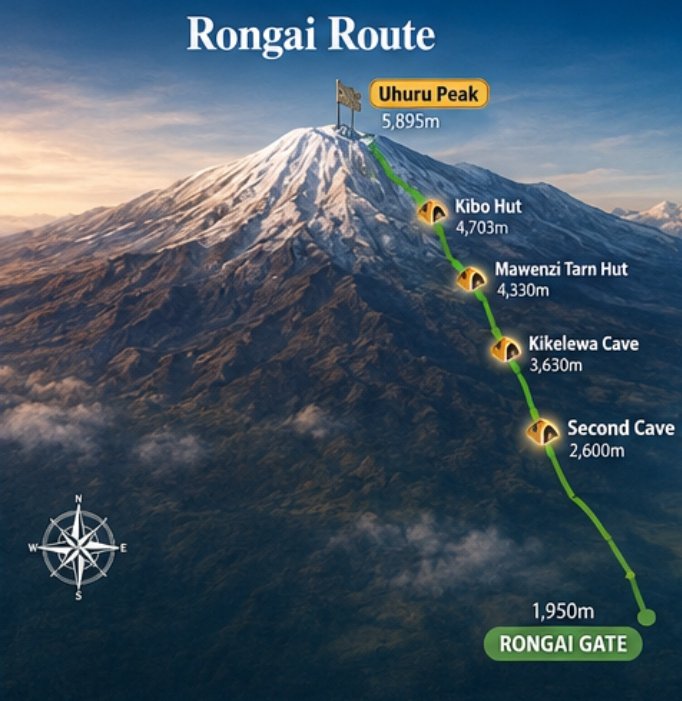
Rongai Route
Best time: January–February & June–October
Rongai approaches Kilimanjaro from the northeastern side, close to the Kenya border. This side of the mountain tends to be relatively drier than the southern slopes, making Rongai an attractive option during periods when other routes may experience more rainfall.
The route is also known for its quieter atmosphere and distinctive wilderness scenery.
Best choice: June–October
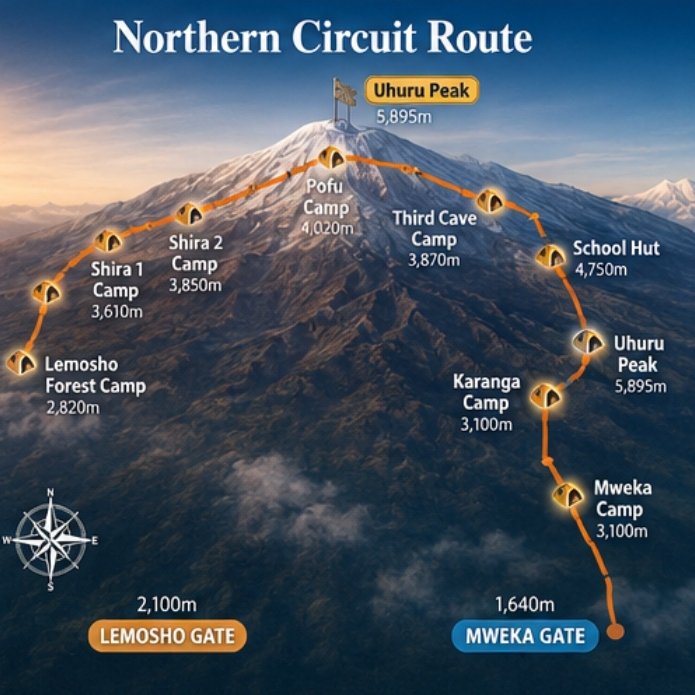
Northern Circuit Route
Best time: January–February & July–October
The Northern Circuit is Kilimanjaro’s longest trekking route, taking a wide path around the northern slopes. Its extended itinerary allows plenty of time for acclimatization and exploration.
The dry seasons are ideal for enjoying the route’s remote landscapes, expansive views, and quieter northern slopes.
Best choice: July–October
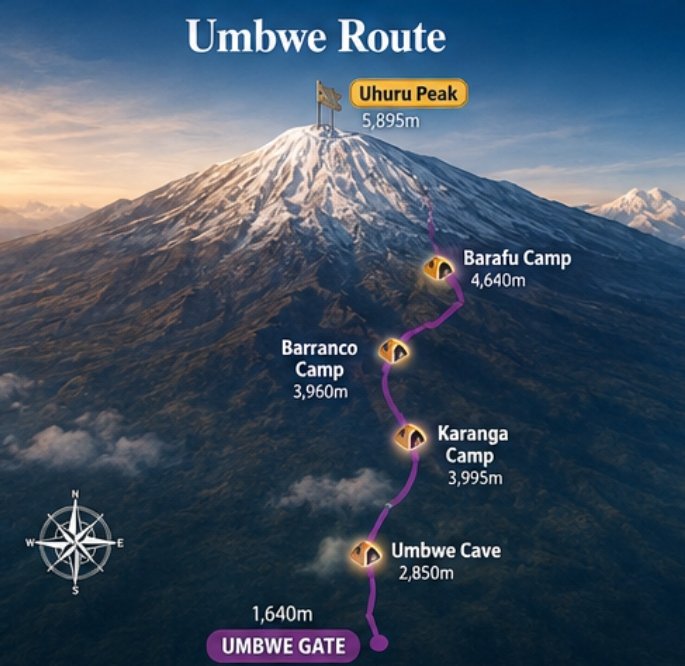
Umbwe Route
Best time: January–February & July–October
Umbwe is one of Kilimanjaro’s steepest and most direct routes. Its lower sections pass through dense forest before quickly gaining elevation, making trail conditions particularly important.
The dry seasons are preferable because steep sections can become challenging when wet. Due to its demanding profile and rapid ascent, Umbwe is generally better suited to experienced trekkers.
Best choice: January–February or August–October
If weather is your priority, the dry-season windows are generally the safest choice across the routes. If you want scenery and photography, Lemosho and Machame are particularly attractive. For fewer crowds, Rongai and Northern Circuit are strong options. And if you want a serious challenge, Umbwe is the most demanding of the routes listed.
Important: Kilimanjaro weather is unpredictable, and no month guarantees dry conditions. Route choice should also consider acclimatization, duration, difficulty, fitness, and your overall trekking goals, not just the month you travel.
Mount Kilimanjaro can be climbed throughout the year, but the number of trekkers on the mountain changes significantly depending on the season. Understanding busy periods, quieter months, and route popularity can help you choose a climbing date that matches the experience you want.
🏔️ Peak Climbing Seasons
The busiest periods generally coincide with Kilimanjaro’s drier and more favorable weather seasons.
June–October is one of the main peak periods, particularly around July, August, and September. The combination of relatively dry weather, school holidays in many countries, and favorable trekking conditions brings more visitors to the mountain.
A second busy period occurs around January–February, when weather conditions are generally favorable and many climbers choose to begin the year with a Kilimanjaro adventure.
During these periods, popular routes and camps can feel noticeably busier.
🔥 Busiest Months
July, August & September
These are typically among the busiest months for Kilimanjaro trekking.
You may experience:
- More trekkers on popular routes
- Busier campsites
- More groups sharing sections of the trail
- Higher demand for guides, porters, accommodation, and park services
- Less solitude on popular routes such as Machame and Marangu
August and September can be especially busy because they fall within the major international holiday period.
🌤️ January & February Crowds
January and February are also popular because they generally offer favorable climbing conditions.
However, they can provide a different atmosphere from the June–October peak. Depending on the specific route and dates, some sections of the mountain can feel considerably quieter.
For travelers who want a combination of good weather and manageable crowds, this period can be an excellent choice.
🌧️ Quieter Periods
March–May and November generally see fewer climbers because these periods overlap with the mountain’s wetter seasons.
The biggest advantage is fewer people on the trails, which can create a more peaceful trekking experience.
However, there is an important trade-off: wetter conditions can mean muddy trails, cloudier views, and more challenging trekking conditions.
May, in particular, can be relatively quiet, but it falls within the long-rain season, so it is not usually the first choice for travelers prioritizing dry weather.
| Period | Crowd Level | General Experience |
|---|---|---|
|
January |
🟡 Moderate–Busy |
Good conditions, increasing demand |
|
February |
🟡 Moderate–Busy |
Favorable weather, popular period |
|
March |
🟢 Quieter |
Rain becomes more likely |
|
April |
🟢 Very Quiet |
Long-rain season |
|
May |
🟢 Very Quiet |
Wet conditions, fewer trekkers |
|
June |
🟡 Moderate |
Crowds begin increasing |
|
July |
🔴 Busy |
Peak trekking season |
|
August |
🔴 Very Busy |
One of the busiest periods |
|
September |
🔴 Very Busy |
Excellent conditions, high demand |
|
October |
🟡 Moderate–Busy |
Crowds begin decreasing |
|
November |
🟢 Quieter |
Short rains, fewer trekkers |
|
December |
🟡 Moderate |
Holiday demand increases |
🌕 FULL MOON CLIMB
A Full Moon can transform a summit-night trek. The moon provides natural illumination, making sections of the trail easier to see and creating a beautiful atmosphere across the mountain.
For climbers, one of the biggest attractions is being able to experience the landscape without relying entirely on headlamps. The moonlit scenery can also create excellent opportunities for memorable photographs.
Best for:
- Moonlit summit trekking
- Night and landscape photography
- Seeing the mountain under natural moonlight
- Combining a moonlit ascent with sunrise from the summit
- First-time climbers who want a visually memorable summit experience
Trade-off: The bright moon makes many stars less visible, particularly fainter stars.
🌑 NEW MOON CLIMB
A New Moon produces the opposite effect. With very little moonlight, the night sky can become exceptionally dark when the weather is clear.
This makes the New Moon period particularly attractive for stargazing and astrophotography. From high-altitude camps and during the summit approach, you may have impressive views of the Milky Way and countless stars.
Best for:
- Stargazing
- Milky Way photography
- Astrophotography
- Experiencing a naturally dark mountain sky
- Travelers who prioritize the night sky over moonlight
Trade-off: The summit trail will be much darker, so climbers depend more heavily on their headlamps.
WHICH SHOULD YOU CHOOSE?
Choose a Full Moon climb if:
You want a bright, atmospheric summit night, beautiful moonlit landscapes, and the unique experience of trekking toward Uhuru Peak beneath a bright moon.
Choose a New Moon climb if:
Your priority is stargazing, the Milky Way, and astrophotography, and you want to experience one of Africa’s great mountain landscapes beneath a darker night sky.
The Best Choice for Stargazers
For a website targeting travelers, you can position it simply:
Full Moon = Best for Moonlight & Night Photography
New Moon = Best for Stargazing & Milky Way
Keep in mind that cloud cover and atmospheric conditions can matter more than the moon phase. Even a New Moon won’t guarantee spectacular stars if the summit is covered by clouds.
Yes, you can still climb Mount Kilimanjaro during the rainy season, but it requires careful planning and realistic expectations. Kilimanjaro remains open for trekking, and some experienced climbers deliberately choose the wetter months because the mountain is generally quieter and less crowded.
The main consideration is that rainy-season trekking can be more challenging. Lower elevations may experience wet and muddy trails, while higher elevations can bring cloud, cold conditions, and reduced visibility.
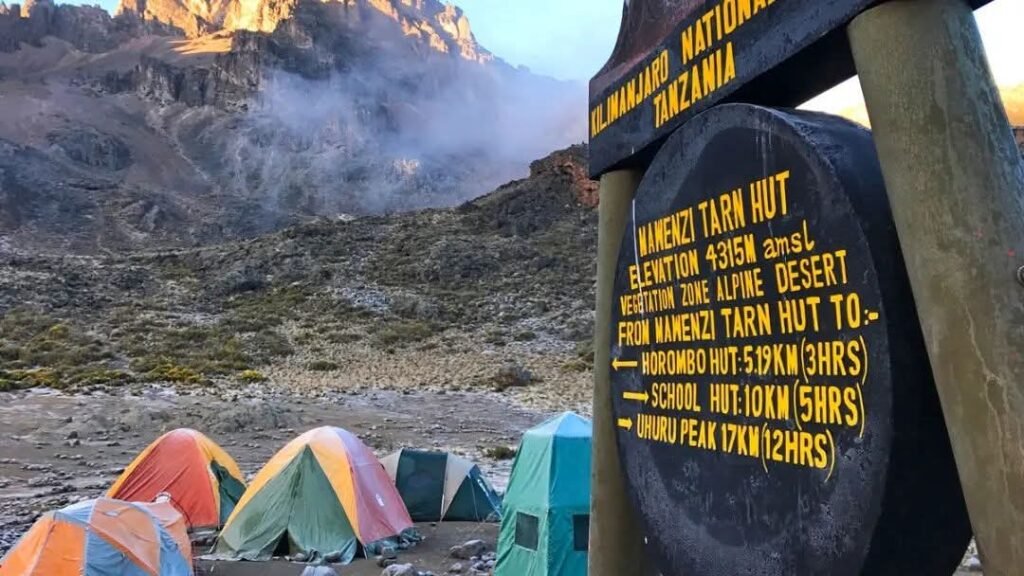
🌧️ When Is the Rainy Season?
Kilimanjaro generally experiences two main rainy periods:
Long rains: March–May
This is the wetter period, with April typically experiencing particularly heavy rainfall.
Short rains: November–December
These rains are generally shorter and can be more variable than the long-rain season.
Weather can vary considerably from year to year, so these periods should be treated as general patterns rather than guarantees.
Fewer Crowds
One of the biggest advantages is having fewer trekkers on the mountain. Popular camps and trails can feel much quieter compared with July–September or January–February. For travelers who value peace and solitude, this can be a major benefit.
A More Peaceful Experience
With fewer groups around, you may experience a stronger sense of wilderness. The rainforest can also look particularly lush during wetter periods, creating beautiful scenery on the lower sections of the mountain.
Potentially Greater Flexibility
Because demand is generally lower, there can be more flexibility with trekking dates and accommodation arrangements. However, availability and pricing depend on the operator and season.
Muddy & Slippery Trails
Rain can make trails, especially through the Rainforest Zone, muddy and slippery. Good footwear and appropriate trekking equipment become especially important.
Wet Equipment
Keeping clothing, sleeping gear, and personal belongings dry becomes more important. A good waterproofing system for your backpack and clothing can make a significant difference.
Reduced Visibility
Clouds and mist can obscure mountain views, particularly at lower and middle elevations. This means you may not always get the panoramic views you would expect during clearer weather.
Cold & Unpredictable Conditions
As you gain altitude, precipitation can occur as rain, sleet, or snow depending on elevation and conditions. Temperatures also become progressively colder.
🌦️ November–December
The short-rain season can be a reasonable option for adventurous travelers who want fewer crowds but don’t want to commit to the wetter long-rain period.
🌧️ March–May
The long-rain season is generally the more challenging period. April in particular can bring substantial rainfall, making trekking conditions more demanding.
For climbers whose priority is maximum comfort and predictable weather, the main dry seasons are usually a better choice.
If someone chooses to trek during a rainy period, route selection matters.
Rongai Route can be attractive because it approaches Kilimanjaro from the northern side, which generally receives less precipitation than the southern slopes.
Northern Circuit can also be considered because of its longer itinerary and northern-side sections, although weather remains unpredictable at high altitude.For the wetter months, the key is not simply choosing a “dry route”—no Kilimanjaro route is guaranteed to remain dry.
Rainy-season climbers should pay particular attention to waterproofing:
- Waterproof hiking boots
- Waterproof jacket and trousers
- Backpack rain cover
- Dry bags or waterproof packing bags
- Moisture-wicking base layers
- Warm insulating layers
- Extra socks
- Trekking poles for slippery sections
- Headlamp
- Warm summit clothing
Your trekking operator should also provide guidance on equipment appropriate for the expected conditions.
Climbing Mount Kilimanjaro does not have to be the entire Tanzania experience. Many travelers choose to combine their Kilimanjaro trekking adventure with a wildlife safari or a relaxing Zanzibar beach holiday.
This combination allows you to experience three very different sides of Tanzania: mountains, wildlife, and the Indian Ocean. After the physical challenge of reaching Uhuru Peak, you can continue your journey with the excitement of a safari or unwind on Zanzibar’s beaches.
Combining Kilimanjaro with a Tanzania safari is an excellent option for travelers who want to experience both Africa’s highest mountain and its legendary wildlife.
After completing your climb, you can continue to destinations such as Tarangire National Park, Ngorongoro Crater and Serengeti National Park.
A typical combination could look like:
Kilimanjaro Trek → Recovery Day → Tarangire → Ngorongoro → Serengeti
Why combine them?
- Conquer Mount Kilimanjaro
- Search for Tanzania’s iconic wildlife
- Experience the Big Five ecosystem
- Enjoy spectacular African landscapes
- Capture completely different environments in one trip
- Make better use of an international trip to Tanzania
Ideal for: Adventure travelers, wildlife enthusiasts, photographers, and first-time visitors to Tanzania.
If you want to balance adventure with relaxation, combining Kilimanjaro with Zanzibar is an excellent choice.
After several days of trekking at high altitude, Zanzibar provides the opportunity to slow down and enjoy the Indian Ocean, white-sand beaches, cultural experiences, and historic Stone Town.
A typical combination could look like:
Kilimanjaro Trek → Rest in Arusha → Fly to Zanzibar → Beach Holiday
You can spend your Zanzibar days enjoying:
- Beach relaxation
- Swimming and ocean activities
- Snorkeling and marine experiences
- Exploring Stone Town
- Island excursions
- Sunset experiences
- Local cuisine and cultural experiences
Ideal for: Couples, honeymooners, families, beach lovers, and travelers looking for a relaxing ending to their mountain adventure.
At Kili2sere Adventure, we believe choosing the right time to climb Kilimanjaro is about more than simply looking for the driest month. The best climbing plan should consider weather, route, acclimatization, crowd levels, trekking duration, and the overall experience you want from the mountain.
Kilimanjaro can be climbed throughout much of the year, but the generally drier periods offer more favorable trekking conditions, while the wetter seasons bring greater chances of rain and cloud.
Our Overall Recommendation
For most travelers, January–February and June–October are the periods we would prioritize. If your main goal is to combine good weather, clear views, and a more enjoyable trekking experience, these periods provide some of the strongest options. January–February can also offer a good balance between favorable conditions and lower crowd levels than the busiest part of the June–October season.
Our Route Recommendation
For travelers who have flexibility, Lemosho is one of our preferred choices because of its scenic approach and longer itinerary, which gives more time for acclimatization. For travelers who have more time and want a quieter, gradual experience, the Northern Circuit is another excellent option. If you are specifically looking for a quieter route, Rongai can be attractive because it approaches the mountain from the northern side, which is generally drier than the southern slopes.
Kili2sere’s Golden Rule
Don’t choose Kilimanjaro based on the month alone. Choose the right combination of season, route, duration, and preparation.
Weather on a 5,895-metre mountain can change quickly, so even during traditionally dry periods, climbers should be prepared for rain, cold, wind, and changing visibility.
Our goal at Kili2sere Adventure is not simply to get you to the mountain—we want to help you choose a Kilimanjaro experience that matches your priorities and gives you the best possible opportunity to enjoy the journey to Uhuru Peak.