
Mount Kenya – A World of Peaks, Glaciers and Alpine Beauty
Rising close to the Equator in the heart of Kenya, Mount Kenya is one of Africa's most remarkable natural landmarks. As the highest mountain in Kenya and the second-highest in Africa, it is celebrated for its dramatic rocky summits, ancient volcanic formations, remaining glaciers, beautiful mountain lakes and extraordinary changes in vegetation. Beyond its impressive height, Mount Kenya is a destination where natural history, biodiversity, adventure and cultural heritage come together to create an unforgettable mountain experience.
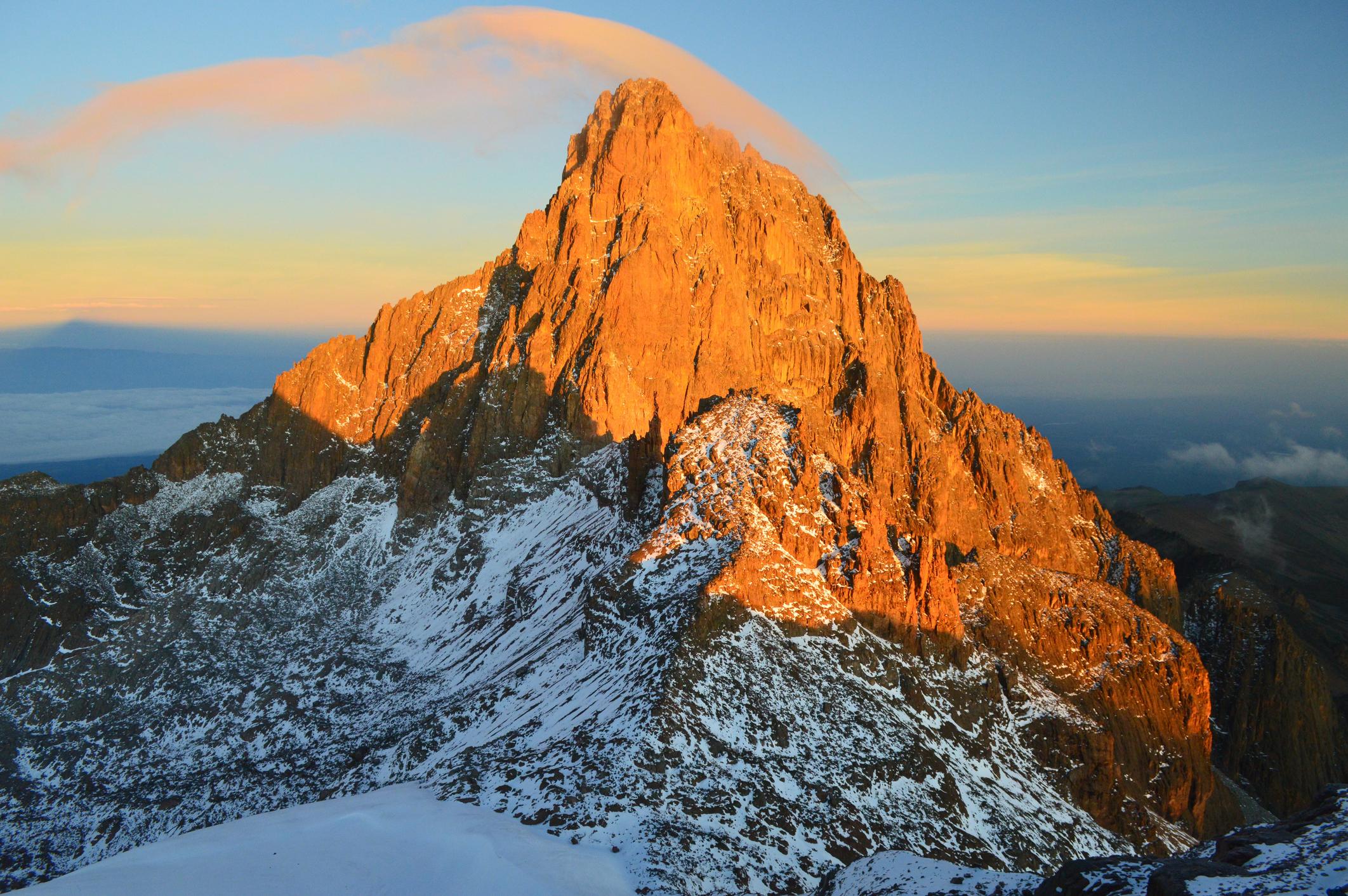
Understanding Mount Kenya
Mount Kenya is an ancient extinct volcano located in central Kenya, with its mountain massif extending across several surrounding counties, including Nyeri, Meru, Embu and Kirinyaga. The mountain lies almost directly on the Equator, making its snow and ice-covered upper peaks particularly fascinating. While equatorial regions are commonly associated with warm temperatures, Mount Kenya demonstrates how altitude can create a completely different climate, supporting cold alpine conditions and even glaciers at its highest elevations.
The mountain reaches its highest point at Batian, standing at approximately 5,199 metres above sea level. It is a dramatic landscape of steep ridges, rugged volcanic rock, deep valleys and high-altitude plateaus. Its upper slopes rise above extensive mountain forests, while its lower foothills gradually merge into agricultural landscapes and the surrounding Kenyan highlands.
Mount Kenya is not simply a mountain that visitors travel to see from a distance. It is an entire natural ecosystem containing different habitats, unique plant communities, wildlife and geological formations. Each elevation reveals a different environment, allowing visitors to understand how nature changes as temperature, rainfall, oxygen availability and exposure to the elements change.
The mountain and its surrounding natural forests are protected as part of Mount Kenya National Park and the wider Mount Kenya conservation landscape. Its outstanding natural importance was recognised internationally when Mount Kenya National Park and Natural Forest became a UNESCO World Heritage Site in 1997.
The Geological Formation and Ancient History of Mount Kenya
Mount Kenya was formed through volcanic activity millions of years ago, when powerful geological forces beneath the Earth's surface created a massive volcanic mountain. Its volcanic history dates back approximately 3.1 to 2.6 million years, during a period of significant geological activity in East Africa. At its original height, the ancient volcano is believed to have risen considerably higher than the mountain seen today.
Over millions of years, volcanic activity ceased and the mountain was gradually transformed by natural processes. Wind, rainfall, temperature changes and extensive glacial activity contributed to the erosion of its original volcanic structure. These processes created the dramatic landscape of sharp peaks, steep-sided ridges, deep valleys and exposed rock formations that make Mount Kenya so distinctive today.
Glaciers played an especially important role in shaping the upper mountain. As ancient ice moved through the high-altitude landscape, it carved deep valleys and created distinctive U-shaped formations. Some of these valleys are now among the most recognisable geographical features of Mount Kenya, offering remarkable scenery for visitors exploring the mountain's surrounding wilderness.
The mountain also contains glacial lakes, small tarns and rocky deposits left behind by retreating ice. These features provide valuable evidence of the mountain's climatic and geological history. Studying them helps scientists understand how mountain environments have changed over thousands of years and how they continue to respond to modern climate change.
Although Mount Kenya is an extinct volcano, its geological structure remains visible throughout the mountain. Its rugged central peaks, volcanic rock formations and deeply eroded slopes tell the story of a natural landmark shaped by powerful forces over an exceptionally long period.
The Three Main Peaks of Mount Kenya
The central summit region of Mount Kenya is dominated by three famous peaks: Batian, Nelion and Point Lenana. Each has its own geographical character, elevation and significance. Together, they form the dramatic mountain skyline that distinguishes Mount Kenya from other mountains in East Africa.
Batian – The Highest Point of Mount Kenya
Batian is the highest peak of Mount Kenya, reaching approximately 5,199 metres above sea level. It is also the highest point in the entire country of Kenya and the second-highest mountain summit in Africa after Mount Kilimanjaro's Uhuru Peak. Batian is characterised by steep rock faces, exposed ridges and an impressive summit structure that rises dramatically above the surrounding alpine landscape.
Unlike a conventional hiking destination, Batian is a technical mountaineering objective. Its ascent requires advanced rock-climbing ability, specialist experience and appropriate professional support. For this reason, it is generally associated with experienced mountaineers rather than ordinary trekking visitors.
Nelion – The Second-Highest Summit
Nelion stands at approximately 5,188 metres above sea level, making it the second-highest peak of Mount Kenya. It lies close to Batian, and the two summits are separated by a high mountain gap commonly known as the Gate of the Mists. Nelion is recognised for its impressive rock walls, steep terrain and challenging alpine character.
The peak is an important destination in technical mountaineering and forms part of the mountain's famous central summit complex. Its close relationship with Batian creates one of the most spectacular mountain skylines in Kenya, especially when viewed from the surrounding high-altitude valleys.
Point Lenana – The Main Trekking Summit
Point Lenana reaches approximately 4,985 metres above sea level and is the principal summit destination for most trekking visitors to Mount Kenya. Unlike Batian and Nelion, Point Lenana is generally approached as a high-altitude trekking objective rather than a technical rock-climbing summit. It offers a remarkable opportunity to experience the mountain's alpine environment without undertaking the technical climbing required by the two higher peaks.
From the summit area, visitors can enjoy wide views across the surrounding mountain ridges, valleys, alpine landscapes and, when atmospheric conditions are favourable, distant sections of the Kenyan highlands. The experience is especially memorable because the journey to Point Lenana passes through several distinct ecological zones before reaching the high mountain environment.
The Diverse Landscapes and Natural Scenery
One of the most fascinating aspects of Mount Kenya is the extraordinary variety of landscapes found across its slopes. The mountain does not have a single uniform environment. Instead, it contains several ecological and geographical zones that change gradually with increasing elevation. This creates a journey through forests, bamboo vegetation, open moorlands, alpine grasslands, rocky valleys and glacial terrain.
The lower mountain slopes are characterised by extensive forest cover, where tall indigenous trees create a cool and relatively humid environment. As visitors move higher, the forest gradually changes into bamboo and mixed mountain vegetation. Further above, the trees become shorter and are replaced by giant heathers, shrubs and open moorland.
The upper mountain is dominated by open alpine terrain, where vegetation becomes increasingly specialised to survive cold temperatures, strong winds and significant differences between daytime and nighttime conditions. At the highest elevations, the landscape becomes rocky and exposed, with glaciers, scree slopes and impressive volcanic formations.
These changing landscapes are an important part of Mount Kenya's appeal. Visitors do not experience only one type of scenery; instead, the mountain reveals different natural environments as its elevation increases. This diversity makes the destination particularly valuable for nature enthusiasts, photographers, conservationists and travellers interested in mountain ecosystems.
The Vegetation Zones of Mount Kenya
Mount Kenya supports an exceptional range of vegetation communities. These are strongly influenced by altitude, rainfall, temperature and soil conditions. As the elevation increases, the vegetation changes from dense montane forest to bamboo, heathland, moorland and finally sparse alpine plant communities.
Montane Forest Zone
The lower and middle slopes contain extensive montane forest, which is among the most important ecological features of the mountain. This forest provides habitat for numerous wildlife species and supports a variety of indigenous trees, shrubs, ferns and other plant life. Tree species such as podocarpus and African juniper occur in parts of the forest ecosystem, while wetter sections support different forest communities adapted to higher moisture levels.
The forest also plays an essential environmental role by protecting the soil, regulating water flow and supporting the streams and rivers that originate from the mountain. Its dense vegetation helps maintain the ecological balance of the surrounding highlands and provides an important natural barrier against soil erosion.
Bamboo and Transitional Forest Zone
At higher elevations, sections of the forest transition into bamboo vegetation and mixed woodland. Bamboo forms an important part of the mountain's ecological structure, creating habitat and food resources for some wildlife species. This zone also demonstrates how plant communities gradually change as conditions become cooler and more exposed.
The transition between forest and bamboo vegetation is particularly interesting because it represents an ecological boundary. Different plants dominate at different elevations, and the structure of the vegetation becomes increasingly adapted to the mountain's changing environment.
Heathland and Moorland Zone
Above the main forest areas, Mount Kenya opens into a distinctive landscape of giant heathers, open moorlands and alpine grasslands. This region has a more exposed appearance, with scattered shrubs, grasses and specialised mountain plants. The absence of continuous tall forest allows visitors to appreciate the mountain's wide valleys, rocky ridges and open highland scenery.
The moorland zone is especially known for its unusual plant life. Giant groundsels and giant lobelias are among the most recognisable examples of plants adapted to high-altitude conditions in East Africa. Their distinctive shapes and growth patterns make the mountain's alpine environment botanically remarkable.
Afro-Alpine and High-Altitude Zone
The highest ecological zone is characterised by cold temperatures, strong exposure to wind and limited vegetation. Plant life becomes increasingly sparse as the terrain approaches the rocky summit region. Only specialised species can survive in these demanding conditions, and continuous vegetation gradually disappears at the highest elevations.
The Afro-alpine ecosystem is one of the most scientifically important features of Mount Kenya. It contains specialised plant communities that have adapted to unusual combinations of intense sunlight, freezing nights and significant daily temperature variations. The survival of these species demonstrates the remarkable ability of nature to adapt to extreme environments.
Glaciers, Mountain Lakes and Alpine Valleys
Mount Kenya is famous for its remaining glaciers, which are among the most distinctive features of its upper mountain landscape. These glaciers are remnants of much larger ice formations that existed during colder periods in the mountain's history. Although their size has reduced significantly over time, they continue to contribute to the mountain's unique scenery and scientific importance.
UNESCO has documented twelve remnant glaciers on Mount Kenya, although these ice formations have been retreating rapidly. Their reduction reflects wider climatic changes affecting mountain environments across the world. The glaciers are therefore not only beautiful natural features but also important indicators of environmental change.
The mountain also contains numerous glacial lakes and tarns formed through geological and glacial processes. These high-altitude water bodies are surrounded by rocky slopes, alpine vegetation and dramatic mountain scenery. Their clear waters and remote settings contribute to the exceptional beauty of Mount Kenya.
Some of the well-known lakes in the Mount Kenya region include Lake Ellis, Lake Michaelson and Lake Alice. Each is associated with a different part of the mountain landscape, and together they demonstrate the variety of glacial and volcanic features found across the mountain.
The valleys surrounding the central peaks are equally impressive. Their steep walls, rocky ridges and broad glacial formations reveal the powerful influence of ancient ice and erosion. These valleys create some of the most memorable landscapes within the Mount Kenya wilderness.
Wildlife and Biodiversity of Mount Kenya
Although Mount Kenya is widely recognised as a mountain-climbing destination, its ecological importance extends far beyond its peaks. The mountain supports a diverse range of wildlife species that occupy different habitats across its forested slopes, bamboo areas and surrounding conservation landscapes.
The lower forest zones provide important habitat for larger mammals, including African elephants, buffaloes, giant forest hogs and several smaller forest-dwelling species. These animals depend on the forest for food, shelter and access to water. The dense vegetation also provides suitable habitat for shy and less frequently observed mammals.
Other species associated with the mountain ecosystem include black-fronted duikers, tree hyraxes, white-tailed mongooses and various primates. Leopards also occur in the wider mountain forest ecosystem, although their secretive behaviour makes sightings difficult and unpredictable.
Wildlife distribution changes with elevation because different animals require different habitats and food resources. Larger mammals are generally associated with the forested and lower mountain areas, while the upper moorlands support a different range of specialised species adapted to colder conditions.
The wider Mount Kenya conservation landscape also connects with important wildlife habitats beyond the main mountain slopes. Areas such as Lewa Wildlife Conservancy and Ngare Ndare Forest Reserve contribute to the broader conservation value of the region, supporting wildlife movement and ecological connectivity.
Birdlife and Important Mountain Species
Mount Kenya is an excellent destination for bird enthusiasts because its changing habitats support different bird communities. The montane forests provide shelter and feeding opportunities for forest birds, while the open moorlands and higher alpine areas support species adapted to cooler mountain environments.
Birdlife associated with the wider mountain ecosystem includes sunbirds, francolins, eagles, owls and several other forest and highland species. Some birds are more commonly encountered in the forest canopy, while others can be observed around open clearings, rocky slopes and mountain grasslands.
The presence of different habitats across a relatively compact geographical area makes the mountain particularly interesting for ecological observation. Visitors interested in birds can appreciate how species distribution changes between the lower forests and the higher mountain environments.
Responsible wildlife observation is important throughout the mountain. Visitors should maintain a respectful distance from animals, avoid disturbing nesting areas and follow conservation guidelines established by the park authorities.
Mount Kenya as an Important Water Tower
One of Mount Kenya's greatest contributions to the surrounding region is its role as an important water catchment area. The mountain receives rainfall and supports forest ecosystems that help regulate the movement and storage of water. Streams and rivers originating from its slopes supply water to communities, farms and natural habitats across large parts of central Kenya.
Its forests are particularly important because they help slow surface runoff, protect the soil and maintain the natural water cycle. When forest ecosystems remain healthy, they support more stable water flows and help reduce the impact of soil erosion and land degradation.
Water from the Mount Kenya region is important for domestic use, agricultural activities, livestock and wider economic development. The mountain's environmental health is therefore directly connected to the wellbeing of communities living around it and beyond.
Protecting Mount Kenya is not only about conserving beautiful landscapes or protecting rare wildlife. It is also about safeguarding a vital natural resource that supports human life and ecological systems throughout the surrounding region.
The Cultural and Spiritual Importance of Mount Kenya
Mount Kenya holds deep cultural and spiritual significance for communities that have lived around its slopes for generations. For many local people, the mountain is much more than a geographical landmark. It is connected to traditional beliefs, ancestral heritage, identity and the relationship between human communities and the natural environment.
Among the Kikuyu community, the mountain is traditionally known as Kirinyaga and is associated with the spiritual presence of Ngai. Traditional beliefs describe the mountain as a sacred place connected to the divine, and its summit has historically held an important place in cultural understanding and religious practices.
The Meru and other neighbouring communities also maintain cultural connections with the mountain. These relationships reflect generations of interaction with the surrounding forests, rivers, agricultural lands and highland environments. Traditional knowledge about seasons, water, plants and the natural landscape has contributed to the cultural identity of communities living around Mount Kenya.
Visitors exploring the region should understand that Mount Kenya is not simply a recreational destination. It is also a culturally respected landscape. Responsible tourism therefore involves respecting local traditions, listening to community perspectives and recognising the importance of the mountain beyond its physical beauty.
Climate and Weather Conditions on Mount Kenya
Despite its location near the Equator, Mount Kenya experiences a wide range of climatic conditions because of its considerable elevation. Temperatures around the lower foothills can be relatively mild and warm, while the upper mountain experiences much colder conditions. This contrast creates several climatic zones within the same mountain environment.
The lower forest areas generally experience more moderate temperatures and higher moisture levels. As elevation increases, temperatures decrease and the environment becomes increasingly exposed. In the alpine region, visitors may encounter strong winds, freezing nighttime temperatures, cloud cover and sudden changes in weather.
Rainfall patterns are influenced by seasonal weather systems and the mountain's geographical position. The wetter periods generally occur during the long rains and short rains, while relatively drier conditions are often experienced during other parts of the year. However, mountain weather can be unpredictable, and conditions may vary considerably between different slopes and elevations.
The mountain's changing weather is an important consideration for visitors. A clear morning in the lower forest does not necessarily mean that the summit region will have similar conditions. Proper planning, local weather information and guidance from qualified mountain professionals are important when organising a mountain visit.
Best Time to Visit Mount Kenya
Mount Kenya can be visited throughout the year, but the experience depends on the activities planned and the prevailing weather conditions. Visitors interested in mountain trekking generally consider the relatively drier periods because trails may be less muddy and visibility can be more favourable. However, weather conditions at high altitude remain variable even during traditionally drier months.
The periods around January to March and July to October are commonly considered favourable windows for trekking, although conditions differ from year to year. The months associated with heavier rainfall may bring wetter trails, increased cloud cover and more challenging conditions in some areas.
Visitors interested in photography and landscape appreciation may prefer periods when visibility is generally clearer. However, the mountain's atmosphere changes throughout the day, and cloud formations, sunlight and weather can create different scenic experiences.
Rather than selecting travel dates based on a fixed promise of perfect weather, it is best to plan according to current conditions, the chosen itinerary and the advice of experienced local professionals. This approach allows visitors to enjoy Mount Kenya while maintaining realistic expectations about mountain weather.
Activities and Experiences Around Mount Kenya
Mount Kenya offers a variety of experiences for visitors with different interests. Although mountain trekking is one of its most recognised attractions, the surrounding region also provides opportunities for nature appreciation, photography, birdwatching, cultural exploration and discovering the landscapes of Kenya's central highlands.
Mountain Trekking and High-Altitude Experiences
Trekking is among the most popular ways to experience Mount Kenya. Visitors can explore its changing vegetation zones, highland valleys, mountain lakes and alpine scenery. Point Lenana is the principal trekking summit for most visitors, offering an opportunity to experience the mountain's high-altitude environment.
Mountain trekking is a physically demanding activity, particularly because of the altitude and changing weather conditions. Visitors should choose an itinerary appropriate to their experience and travel with qualified professionals. More technical summit objectives require specialist mountaineering expertise and are not suitable for ordinary trekking visitors.
Nature Walks and Forest Exploration
The lower mountain forest provides a different experience from the exposed summit region. Its indigenous trees, bamboo vegetation, streams and forest clearings create an excellent environment for appreciating the mountain's biodiversity. Nature-focused visits allow travellers to understand the ecological importance of the forest without necessarily undertaking a high-altitude expedition.
Birdwatching and Wildlife Observation
Birdwatching and wildlife observation are rewarding activities for visitors interested in nature. The mountain's different habitats support a range of bird and mammal species, although wildlife sightings depend on location, season and natural animal behaviour. The best experiences come from patient observation and respect for the surrounding environment.
Landscape Photography and Scenic Exploration
Mount Kenya provides exceptional scenery for landscape photography. Its rocky summits, forested slopes, open moorlands, alpine lakes and changing cloud formations create different photographic opportunities throughout the day. The surrounding highlands also provide beautiful views of the mountain and its wider natural landscape.
Main Access Routes to Mount Kenya
Mount Kenya can be approached from different sides of the mountain, and each access route introduces visitors to a different section of its landscape. The three best-known approaches are Sirimon, Naro Moru and Chogoria. They are recognised for their distinct scenery, geographical position and role in mountain trekking itineraries.
Sirimon Route
The Sirimon approach is located on the north-western side of Mount Kenya and is accessed through the Nanyuki area. It is known for its gradual transition through forest, moorland and high-altitude landscapes. The surrounding scenery provides a valuable opportunity to observe changes in vegetation as the mountain environment becomes progressively more exposed.
The route is often selected for itineraries that allow visitors to experience the northern slopes and their distinctive landscape. It is also commonly combined with other approaches to create a wider journey across the mountain.
Naro Moru Route
The Naro Moru approach lies on the western side of the mountain and is accessed through the Naro Moru area. It is one of the best-known routes associated with Mount Kenya trekking. Its surrounding landscape includes forested areas, open mountain terrain and the upper valleys leading towards the central summit region.
The route is recognised for its direct access to the mountain's central areas, although its terrain and changing altitude make proper planning important. Visitors should understand the nature of the selected itinerary before travelling.
Chogoria Route
The Chogoria approach is located on the eastern side of Mount Kenya and is particularly appreciated for its dramatic scenery. It passes through landscapes associated with deep valleys, rocky cliffs, mountain lakes and expansive alpine views. The Gorges Valley is one of the most recognisable scenic features associated with this side of the mountain.
The Chogoria side provides a different visual experience from the western and northern approaches. Its combination of highland lakes, open valleys and steep mountain formations makes it particularly attractive to visitors interested in natural scenery and landscape photography.
The choice of route depends on the visitor's interests, available time, experience and the nature of the planned visit. Routes and access arrangements should always be confirmed with the relevant park authorities and qualified local professionals before travel.
Conservation and Environmental Importance
Mount Kenya is one of Kenya's most important natural conservation areas. Its protected forests, mountain vegetation, glaciers, lakes and wildlife habitats contribute to the ecological stability of the wider region. The mountain's designation as a UNESCO World Heritage Site reflects its outstanding natural value and its importance to the conservation of unique mountain ecosystems.
However, the mountain faces several environmental pressures. Climate change is contributing to the retreat of its remaining glaciers, while pressure on surrounding forests and natural resources can affect biodiversity and water systems. These challenges demonstrate the need for long-term conservation planning and responsible management.
Protecting Mount Kenya requires cooperation between conservation authorities, local communities, researchers, tourism operators and visitors. Forest restoration, sustainable land management, wildlife protection and responsible tourism all contribute to maintaining the mountain's natural value.
Visitors can support conservation by following park regulations, avoiding littering, respecting wildlife, using authorised access arrangements and supporting responsible tourism businesses. Even small actions contribute to the protection of fragile mountain environments.
Responsible Tourism and Respect for the Mountain
A visit to Mount Kenya should be approached with respect for its natural environment, local communities and cultural importance. Mountain ecosystems are sensitive to human disturbance, and responsible visitor behaviour helps reduce the environmental impact of tourism.
Visitors should avoid leaving waste behind, damaging vegetation or disturbing wildlife. They should also respect designated trails and protected areas, follow the instructions of park authorities and ensure that their activities are organised through appropriate and responsible operators.
Respect for local communities is equally important. Visitors should appreciate local customs, seek permission where appropriate when photographing people and understand that the mountain holds cultural meaning for communities living around it.
Responsible tourism allows visitors to enjoy Mount Kenya while contributing to the long-term protection of the landscape and the wellbeing of people connected to it.
How to Reach Mount Kenya
Mount Kenya is accessible from Nairobi and other parts of central Kenya by road. Nanyuki is one of the main towns used as a gateway to the mountain, particularly for visitors approaching through the Sirimon side. Other access points are associated with Naro Moru and the Chogoria area.
The journey from Nairobi offers an opportunity to explore the changing landscapes of central Kenya, including agricultural highlands, rural settlements and scenic mountain foothills. Travel times depend on the selected entrance, road conditions and the visitor's final destination within the Mount Kenya region.
Visitors travelling by air can also consider the Nanyuki area, which has an airstrip serving the wider region. The most appropriate transport arrangement depends on the chosen itinerary, accommodation location and planned activities.
It is advisable to confirm current park access arrangements, transport details and entry requirements before travelling. This helps ensure that the visit is organised smoothly and in accordance with the regulations of the relevant authorities.
Accommodation and Places to Stay Around Mount Kenya
The Mount Kenya region offers a range of accommodation experiences, from comfortable lodges and hotels to mountain accommodation and designated camping areas. The choice depends on the visitor's travel style, budget, itinerary and preferred location.
Nanyuki and the surrounding highlands provide convenient accommodation options for travellers exploring the northern side of the mountain. These locations are suitable for visitors who want to enjoy the mountain scenery while also accessing nearby towns, local restaurants and other regional attractions.
Visitors planning longer mountain experiences may also use accommodation facilities and designated camping arrangements within authorised areas, depending on the itinerary and applicable park regulations. Such arrangements should be confirmed in advance to ensure that the facilities are suitable and available.
Choosing suitable accommodation is an important part of planning a Mount Kenya experience. A well-organised itinerary allows visitors to balance travel time, relaxation and exploration of the surrounding highlands.
Who Should Visit Mount Kenya?
Mount Kenya appeals to a wide range of travellers, including nature lovers, mountain enthusiasts, photographers, birdwatchers, conservation-minded visitors and people interested in discovering Kenya's natural heritage. Its variety of landscapes means that the mountain can offer different experiences depending on how visitors choose to explore the region.
Travellers interested in high-altitude trekking can explore suitable guided itineraries, while visitors who prefer a more relaxed experience can appreciate the mountain's surrounding forests, viewpoints and highland scenery. Those interested in conservation can also learn about the mountain's important role in protecting biodiversity and supplying water to surrounding communities.
Because high-altitude mountain environments can be physically demanding and weather conditions can change quickly, every visitor should choose activities appropriate to their circumstances and follow professional guidance. The most rewarding experience is one that balances exploration, preparation, comfort and respect for the environment.
Why Mount Kenya Deserves a Place on Your Kenya Travel Journey
Mount Kenya is one of East Africa's most extraordinary natural destinations because it combines impressive mountain scenery with exceptional ecological and cultural importance. Its ancient volcanic origins, dramatic central peaks, remaining glaciers, high-altitude lakes and diverse vegetation create a landscape unlike many other destinations in the region.
From the rich forests on its lower slopes to the open alpine environment surrounding Point Lenana, every part of the mountain reveals a different aspect of its natural character. Its wildlife, birdlife and water catchment systems further demonstrate why Mount Kenya is so important to Kenya's environmental heritage.
For visitors exploring Kenya, Mount Kenya offers an opportunity to discover a destination beyond the traditional safari landscape. It brings together nature, adventure, history, conservation and cultural understanding in one remarkable mountain environment.
At Kili2Sere Adventure, we believe that discovering a destination should go beyond simply visiting it. It should involve understanding its natural beauty, appreciating its people and experiencing the landscapes that make it unique. Mount Kenya is an exceptional part of that journey.
Discover the Beauty of Mount Kenya
Let Kili2Sere Adventure help you explore the remarkable landscapes, natural heritage and mountain experiences of Kenya. Contact our team to discuss your travel interests and plan an experience that matches your expectations.
PLAN YOUR JOURNEY